Why Your Scale Jumped After a High-Carb Meal (And How to Read the Next 72 Hours)
By Mofilo Team
Published 14 min read
Key Takeaways
- High-carbohydrate meals pull water into your muscles alongside the glucose. This creates an immediate upward shift on the scale that is primarily fluid volume rather than body fat.
- Most post-meal weight comes from blood volume, gut residue, and muscle glycogen. Giving your body three days of normal eating allows these temporary fluids to flush out naturally.
- Converting carbohydrates directly into fat is a difficult and inefficient process for human biology. A large portion of an acute calorie surplus is burned off as heat or stored in muscle tissue.
- The worst response to a high-scale day is extreme caloric restriction. Returning immediately to your standard baseline targets signals your body to release the retained water.
You step on the scale the morning after a large restaurant dinner. The digital display flashes a number four pounds heavier than yesterday. You did the math on the menu, and even if you miscalculated the cooking oils, you know you did not eat fourteen thousand calories over your target. Yet the scale says you gained exactly that much tissue overnight.
The immediate impulse is to skip breakfast, run for an hour, and restrict your intake to nothing but protein and greens for the rest of the week.
This is how a single social meal cascades into a cycle of restriction and bingeing. The anxiety comes from misinterpreting a biological storage mechanism as a failure of discipline. Most day-to-day scale fluctuations are just water and food in your gut. Fat tissue changes slowly over weeks and months, but fluid shifts happen by the hour.
When you eat a large amount of carbohydrates, your body initiates a predictable sequence of storage protocols. Understanding exactly where the food goes over the next three days strips the anxiety out of the process. You do not need to punish yourself for eating pasta. You just need to know how to read the signals your body sends while it processes the meal.
Where the Immediate Weight Comes From
Food has physical mass. A large meal sitting in your stomach and intestines weighs exactly what it weighed on the plate. If you consumed two pounds of food and a pound of water, the scale will reflect those three pounds until they pass through your digestive tract.
But the carbohydrates themselves drive a secondary, more significant shift in fluid balance.
When you digest carbohydrates, your body breaks them down into glucose. The glucose that is not immediately needed for energy gets packaged into a storage form called glycogen. Your body does not store glycogen dry.
Every single gram of carbohydrate tucked away in your muscle tissue brings a significant amount of fluid with it. Research demonstrates exactly how much water is stored per gram of muscle glycogen, showing a remarkably consistent ratio across populations (Kerksick et al., Journal of the International Society of Sports Nutrition 2018). The accepted physiological standard is roughly three grams of water for every single gram of stored glycogen.
This ratio explains the mathematical impossibility of the overnight fat gain.
If you eat a large plate of pasta and a few slices of bread, you might consume two hundred grams of carbohydrates in a single sitting. As your body stores those two hundred grams in your muscles, it simultaneously pulls six hundred grams of water out of circulation and into the tissue. Together, that carbohydrate and water combination weighs nearly two pounds.
Add the physical mass of the food and the extra fluid retained from restaurant sodium, and a four-pound scale jump becomes entirely predictable. None of that four pounds is fat. It is a temporary reallocation of resources. Your muscles are simply fully stocked with energy and the water required to hold it.
The distinction between intercellular water and subcutaneous fat is critical. Subcutaneous fat sits directly beneath the skin and takes sustained caloric surpluses to accumulate. Water bound to glycogen is pulled deep into the muscle belly itself.
While the scale cannot tell the difference between these two types of mass, your biological systems treat them completely differently. The water will leave as soon as the glycogen is used.
How Much Your Body Can Actually Store
People vastly underestimate the size of their internal carbohydrate sink. The human body is designed to hoard energy for future physical exertion. It maintains dedicated storage sites specifically for this purpose, primarily in the liver and the skeletal muscle tissue.
The liver acts as the central reserve for your brain and nervous system. It holds a relatively small amount of glycogen, releasing it steadily into the bloodstream to keep your blood sugar stable between meals. The skeletal muscles act as a localized reserve for physical movement.
Once glycogen enters a muscle cell, it cannot leave to raise systemic blood sugar. It can only be burned by that specific muscle during activity.
Together, these two compartments hold a massive amount of energy. Studies defining the maximum glycogen storage capacity in the liver and skeletal muscle of healthy adults show these tissues can sequester roughly five hundred grams of carbohydrate before overflowing (Anton et al., Obesity 2017).
Filling this reserve takes a substantial amount of food.
Five hundred grams of carbohydrate equates to two thousand calories of pure starch and sugar. If you enter a restaurant meal with partially depleted glycogen stores from a few days of eating slightly less or walking a bit more, your body has an enormous empty tank waiting to be filled. The calories do not overflow into fat storage until the glycogen reserves are completely topped off.
For a person with a decent amount of muscle mass, topping off those reserves can easily consume the entirety of a massive cheat meal. This is why a single high-calorie event rarely alters your actual body composition. The energy simply gets filed away in the muscle tissue for later use.
Most individuals walking around in a calorie deficit or maintaining a moderately active lifestyle rarely have completely full glycogen stores. They are almost always operating with a partial deficit in the muscle tissue. A large dinner merely bridges that gap, bringing the system back to full capacity for a few hours. Your body prefers this storage method because it is the most accessible form of fuel for high-intensity movement.

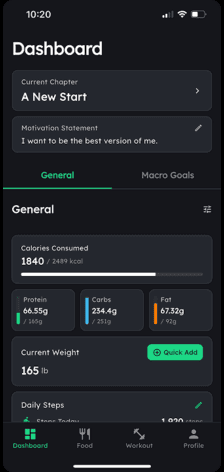
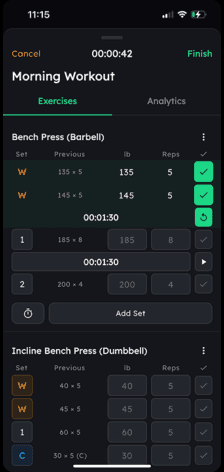
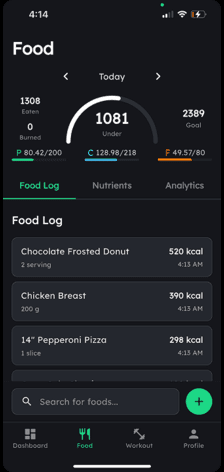
A plan that doesn't panic on Monday.
The instinct is to starve today. Mofilo holds your targets steady until your weekly check-in proves what was just water.
No commitment · Cancel anytime
Why Carbohydrates Rarely Convert to Fat Overnight
Even if you manage to eat past the point of full glycogen saturation, your body does not immediately turn the excess food into fat. The pathway required to turn a carbohydrate molecule into a lipid molecule is called de novo lipogenesis. This pathway is metabolically expensive and highly restricted.
Human biology actively resists this conversion process. Clinical evaluations observing the physiological limits of de novo lipogenesis during acute carbohydrate overfeeding in humans demonstrate that this pathway accounts for a minuscule fraction of energy storage (Adeva‐Andany et al., Bioscience Reports 2016). Under normal circumstances, your liver simply does not have the enzymatic machinery to convert massive amounts of glucose into triglycerides quickly.
Instead of turning the excess carbohydrates into fat, your body attempts to burn them off.
When faced with a sudden influx of calories, your metabolic rate temporarily increases. Digesting, absorbing, and assimilating a large meal requires energy. Measurements of the thermic effect of food and energy dissipation during acute carbohydrate overfeeding reveal that the body actively wastes a portion of the surplus calories rather than storing them (Aragon et al., Journal of the International Society of Sports Nutrition 2017).
Your core temperature rises slightly. You might fidget more, tap your foot, or feel an urge to move around.
This energy dissipation acts as a buffer against weight gain.
The combination of limited de novo lipogenesis and increased heat production means that carbohydrates are incredibly stubborn about forming new body fat. If a calorie surplus does lead to fat storage, it is usually because the dietary fat consumed alongside the carbohydrates gets stored directly in adipose tissue, while the carbohydrates are oxidized for immediate energy.
This explains why high-carbohydrate, low-fat diets historically resulted in weight loss for many populations. Without dietary fat to easily shuttle into adipose tissue, the body was forced to rely on the inefficient de novo lipogenesis pathway to store excess energy. For the average person enjoying a weekend dinner, this biological inefficiency is a massive protective advantage.
What the Data Shows About True Fat Gain
The gap between what the scale says and what actually happens to your body composition is widest in the immediate aftermath of a large meal. If we step away from mathematical theories and look directly at clinical measurements, the reality of overfeeding becomes very clear.
Researchers have tested exactly what happens when humans consume thousands of calories above their maintenance level for a short duration.
They put subjects in controlled environments, feed them massive surpluses, and then use advanced imaging techniques to track where the tissue goes. When quantifying the actual measured fat mass gain following a 1-2 day hypercaloric binge, the results consistently show that the true fat accumulation is only a fraction of the total weight gained on the scale (Creasy et al., Obesity 2018).
A person might gain five pounds of total scale weight over a holiday weekend.
However, the scans often reveal that only a few ounces of that weight is actually new adipose tissue. The rest is the predictable combination of water, glycogen, and lingering digestive mass. The body simply cannot synthesize fat tissue fast enough to match the pace of the eating event. Fat accumulation is a chronic adaptation, not an acute one.
It requires a sustained calorie surplus over many consecutive days or weeks to force the body to build new fat stores. A single isolated spike in calories, even a very large one, is treated as an anomaly. The body absorbs what it can use for glycogen recovery, burns off a little extra as heat, and attempts to pass the rest through the digestive system.
This data should reframe how you view weekend eating. A high-calorie Saturday does not ruin a week of moderate eating. The acute spikes on the scale are noise in the data, reflecting fluid dynamics rather than a sudden expansion of your waistline.
You can look at the elevated number and recognize it for what it is. It is a temporary logistical backlog in your digestive and muscular systems.
The Nutrient Partitioning Effect
The timing of your meals in relation to your physical activity dramatically changes how your body processes a calorie surplus. If you are entirely sedentary, a large meal fills your baseline glycogen stores and leaves the rest for potential storage.
If you lift weights beforehand, the biological environment is completely different.
Resistance training actively drains glycogen from the specific muscles worked. A heavy set of squats depletes the quadriceps and glutes. A difficult back workout empties the lats. This local depletion creates an immediate biological priority for the next meal you consume.
The muscle cells become highly sensitive to insulin and aggressively pull glucose out of the bloodstream. Scientific consensus on how prior exercise and glycogen depletion alter nutrient partitioning of a high-carbohydrate meal confirms that working out heavily biases the body toward muscle repair rather than fat storage (Aragon et al., Journal of the International Society of Sports Nutrition 2017). The incoming carbohydrates are diverted away from adipose tissue and shuttled directly into the depleted muscle bellies.
This partitioning effect is why many lifters deliberately schedule their heaviest training sessions on the days they plan to eat a larger meal. They are artificially expanding the size of the glycogen sink. By emptying the tank a few hours before the restaurant reservation, they ensure that the massive influx of carbohydrates has a productive place to go.
The scale will still go up the next morning.
In fact, it might go up even more than usual. A depleted muscle pulling in carbohydrates and water to recover will swell significantly, leading to a higher total body water reading. But this is the exact type of weight gain you want. It is the physical manifestation of your muscles recovering and preparing for the next training session.
Without that fluid and carbohydrate delivery, your strength would stagnate and your recovery would stall. The post-workout meal serves a structural purpose. When you see the scale rise after a hard session and a heavy dinner, you are looking at the mechanics of adaptation happening in real time.
What to Expect Over the Next Three Days
Navigating the aftermath of a large meal requires a systematic approach to reading your body's signals. The worst thing you can do is react emotionally on day one. Instead, use this three-day framework to interpret what is actually happening as your system normalizes.
Signal one is the immediate hydration demand.
The morning after the meal, you will likely feel incredibly thirsty. This is your body attempting to balance the massive influx of sodium and the water being pulled into your muscles alongside the glycogen. Do not restrict your water intake to try and keep the scale down.
Drink aggressively. Supplying ample water allows the kidneys to flush the excess sodium, which actually accelerates the release of the retained fluid.
Signal two is the temperature shift.
Throughout the first forty-eight hours, you may notice you feel warmer than usual, particularly at night. This is the thermic effect of food and the increased non-exercise activity thermogenesis working to dissipate the excess energy. It is a sign that your metabolism is upregulating to handle the surplus.
Signal three is the training response.
If you go to the gym on the second day, pay attention to your strength and endurance. With fully stocked glycogen reserves, your performance should be noticeably better. You will likely experience a much stronger muscle pump during resistance training because of the increased intramuscular water. This performance boost is the practical benefit of the extra food.
Signal four is the scale normalization on day three.
It takes roughly seventy-two hours for a large meal to completely clear the digestive tract and for fluid balances to stabilize. You should not place any emotional weight on the scale reading until the morning of the fourth day. By this point, the acute water retention will have dissipated, the gut volume will be back to baseline, and the number you see will accurately reflect your true tissue mass.
If you return to your normal dietary targets immediately after the large meal, the weight will drop predictably over these three days. The mistake most people make is slashing their calories on day one to compensate. This restricts the fiber and normal food volume your digestive tract needs to keep moving, which prolongs the gut weight.
Ride out the spike without the starvation.
Go right back to your baseline targets. The fluid flushes out naturally, and your weekly check-in catches the real progress.
No commitment · Cancel anytime
Frequently Asked Questions
How much water weight can I gain from one high-carb meal?
The amount varies based on your muscle mass and how depleted your glycogen stores were before the meal. Most people can expect a temporary increase of two to five pounds. This is a direct biological response to carbohydrates pulling water into the muscle tissue, not an increase in actual body fat.
Does sodium intake affect scale readings the next day?
Yes. Restaurant meals and processed foods contain significantly more sodium than typical home-cooked meals. High sodium intake causes your body to retain extracellular water to keep the sodium concentration in your blood balanced. This fluid retention stacks on top of the glycogen water weight, creating a larger spike on the scale.
When should I weigh myself after a heavy meal?
Most of the time, it is best to wait at least three days before relying on the scale again. It takes roughly seventy-two hours for the digestive tract to clear the physical mass of the food and for the temporary fluid shifts to resolve. Weighing yourself the immediate morning after only measures water and gut residue.
Can a single meal really cause fat gain?
It is very difficult for a single isolated meal to cause measurable fat gain. The human body has limited metabolic pathways to convert sudden massive carbohydrate surpluses directly into adipose tissue. The vast majority of the calories are stored in the muscles as glycogen, burned off as heat, or passed through the digestive system.
Conclusion
The anxiety surrounding a high scale reading usually stems from a misunderstanding of human biology. When you recognize that your body is a dynamic system of fluids, stored energy, and digestive transit, the daily fluctuations lose their emotional power.
A sudden jump on the scale after a heavy meal is a sign that your storage mechanisms are functioning exactly as designed. Your muscles are holding onto glycogen, your body is managing a sodium influx, and your digestive tract is processing the volume. None of this indicates a permanent change to your body composition.
You should return to your normal eating habits the very next day without attempting to drastically cut calories to compensate. Trust the physiological timeline. Give your system three days of normal hydration and movement, and the temporary weight will clear on its own.
All content and media on Mofilo is created and published for informational purposes only. It is not intended to be a substitute for professional medical advice, diagnosis, or treatment. Always seek the advice of your physician or other qualified health provider with any questions you may have regarding a medical condition, including but not limited to eating disorders, nutritional deficiencies, injuries, or any other health concerns. If you think you may have a medical emergency or are experiencing symptoms of any health condition, call your doctor or emergency services immediately.
Read more blogs
How to Handle Social Pressure When You Start Eating Healthy
What You'll Learn in 10 Min
- •Why your new diet makes old friends act defensive
- •Which 2 simple responses stop direct food pushback
- •How occasional compromise beats rigid macro tracking
A Structured Ramp-Up Protocol When You Have No Motivation to Workout After Vacation
What You'll Learn in 9 Min
- •Why lost drive is a metabolic shift, not willpower
- •How to drop total sets to prevent crippling soreness
- •Which low-intensity moves restore your nervous system
How to Maintain Muscle During a Two-Week Vacation From the Gym
What You'll Learn in 12 Min
- •Why early vacation size loss is just water and carbs
- •How restricting calories on a break speeds muscle loss
- •Which protein timing mistake costs you lean mass daily