How to Handle Social Pressure When You Start Eating Healthy
By Mofilo Team
Published 10 min read
Key Takeaways
- Changing your diet alters the social dynamic around food, which often makes friends react defensively to protect their own habits. Understanding this shifts the focus from your food choices to their comfort level.
- Pushback usually falls into either mild teasing or direct pressure to indulge. Acknowledging the joke while holding your boundary defuses the first, while a simple and repeated refusal handles the second.
- Flexibility in social settings sustains long-term progress better than rigid adherence. People who occasionally compromise to enjoy an event usually outlast those who isolate themselves to maintain perfect macros.
- Shifting your internal narrative from someone who is trying a diet to someone who simply eats this way stops the negotiation. Your peers will adapt to the new normal once they see your boundaries are permanent.
You sit down at a restaurant table with a plate that looks distinctly different from everyone else's. Someone makes a joke about rabbit food. Another friend asks if you are going to be no fun tonight. You smile and laugh it off.
Internally, the calculation begins. You wonder if hitting your protein target is worth the immediate social friction. Most people abandon their nutrition plans because the social friction simply becomes too exhausting to manage.
Eating is a deeply communal act. Changing what you eat changes how you participate in the group. Your friends are usually not trying to sabotage your health goals intentionally.
They are reacting to a shift in the shared environment. They feel the absence of your participation in a familiar ritual.
It feels easier to just order the fries and avoid the spotlight. Bridging the gap between your health goals and your social life requires a different approach entirely. You have to establish a new identity within your existing circle.
This process requires clear communication and a firm grasp of your own boundaries. It also requires an understanding of why people push back in the first place.
Why Your Diet Change Makes Other People Uncomfortable
Eating has always been a primary way humans bond. When a group gathers around a table, sharing similar food signals belonging and trust. Changing your plate breaks that unspoken synchronization.
Your friends notice the difference immediately. It creates a subtle tension that has nothing to do with calories or macronutrients. Shared meals reinforce social ties, and deviating from the group norm can temporarily disrupt those bonds (Ball et al., International Journal of Behavioral Nutrition and Physical Activity 2010).
When you decline the shared appetizer, people often interpret it as a rejection of the shared experience. This is why the pushback feels so personal. They are not mourning your lack of carbohydrates. They are trying to preserve the social equilibrium.
Your new habits also act as an unintended mirror. Making a conscious effort to improve your health forces the people around you to briefly evaluate their own choices. Deflection is a highly common response to this discomfort.
Mockery or teasing is just a tool to relieve that sudden self-awareness. Recognizing this dynamic removes the emotional weight from their comments. They are managing their own comfort, not critiquing your goals.
The Identity Shift Threshold
The hardest phase of any dietary change is the middle ground. This is the period where you take new actions but still hold onto your old self-image.
You tell people you are trying to eat better or currently on a diet. Those phrases automatically invite negotiation. They signal to your friends that this is a temporary state. Temporary states can be broken for special occasions, weekends, or just a rough Tuesday.
Long-term adherence depends heavily on moving past this phase and fully adopting a new self-categorization (Kwaśnicka et al., Health Psychology Review 2016). You stop being someone who is restricting calories. You become someone who prioritizes protein and vegetables.
Identity serves as a filter for daily decision-making. Shifting your internal narrative changes the external conversations automatically. You no longer have to debate whether you should order the burger or the salad. The decision is already made by the type of person you have decided to be.
Your friends will test this new identity initially. They want to see if the boundary holds. Once they realize the change is permanent, the teasing usually stops. People respect a firm boundary much more readily than a wavering preference.

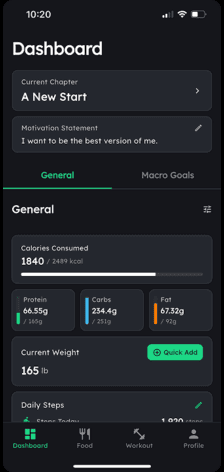
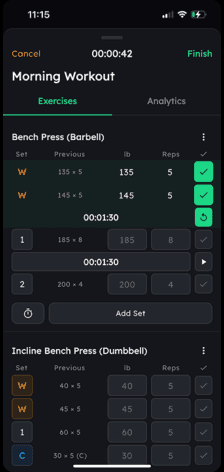
Hold your boundary at dinner.
You do not lack discipline. You just need your written reason on the dashboard when the table orders drinks.
No commitment · Cancel anytime
How Group Settings Drive Dietary Choices
Humans are wired to conform to the group. In a modern restaurant setting, this instinct translates to ordering what everyone else is ordering. We use the behavior of others as a template for our own actions.
People unconsciously adjust their intake to match the volume and type of food consumed by their dining companions (Higgs and Thomas, Research 2015). If everyone at the table orders multiple drinks and dessert, the friction required to ask for a grilled chicken salad increases dramatically.
The fear of social isolation strongly predicts whether someone will abandon their dietary intentions to match the group norm (Liu et al., Journal of Experimental Social Psychology 2019). You are fighting the biological urge to avoid standing out.
Acknowledging this fear reduces its power. You can prepare for it before you arrive at the venue. Review the menu beforehand and make your choice in a vacuum, away from the influence of the group.
When the server arrives, order first. This prevents the cascade of conformity from influencing your decision. It also sets a new anchor for the table. Your willingness to order the lighter option often gives someone else the quiet permission to do the same.
What to Say When Friends Push Unhealthy Food
Knowing what to eat is simple. Defending that choice in real-time is a separate skill entirely. Most people stumble because they over-explain their reasoning.
They launch into a defense of their macronutrient targets, their sleep quality, or their latest blood work. This provides a massive surface area for debate. Your friends do not need a physiological breakdown of your dinner choices.
Developing specific refusal skills and practicing assertiveness significantly improves your ability to maintain healthy behaviors in social settings (Nahum‐Shani et al., Annals of Behavioral Medicine 2016). The most effective response is short, polite, and final.
A simple decline works perfectly. If they press, repeat the exact same phrase. Do not escalate the tone.
Do not offer a new excuse. The broken record technique drains the momentum from the interaction quickly.
If the pressure comes as a joke, agree and amplify. If someone calls you boring for skipping the beer, smile and agree with them. Stripping the resistance out of the interaction leaves them with nothing to push against. The conversation naturally moves on to something else.
Why Flexibility Outperforms Perfect Consistency
Rigidity is often a response to past diet failures. People believe that deviating from their plan even slightly will cause the entire effort to collapse. They decline invitations, bring food scales to restaurants, and isolate themselves.
This approach produces rapid initial results and inevitable long-term burnout. A flexible approach to dietary restraint yields much higher rates of long-term adherence than strict rules (Verstuyf et al., International Journal of Behavioral Nutrition and Physical Activity 2012). Perfection is not required for real change.
Your body responds to the aggregate average of your choices over months, not the variance of a single Friday night.
You can eat a slice of pizza with your friends. You can have a drink. The key is intentionality rather than restriction. Choose the social events that actually matter to you and plan your week around them.
If you know a dinner is coming up, adjust your intake slightly on the preceding days. Enjoy the event without guilt, and return to your baseline the next morning. This neutralizes the social tension. When your friends see that you can still participate in the shared rituals, their anxiety about your new lifestyle drops.
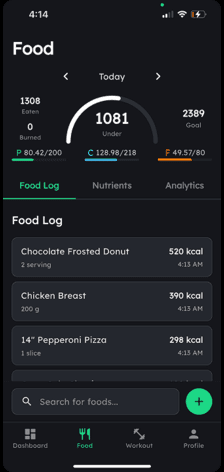
Keep the friends and the results.
You can still go out on Friday. Log the meal in seconds, enjoy the night, and let the check-in update your targets.
No commitment · Cancel anytime
How to Rebuild Your Support Network
You do not have to abandon your current friends to get in shape. You will likely need to expand your circle, though. Relying entirely on a peer group that does not share your goals makes the process unnecessarily difficult.
Willpower is finite. Relying on it to swim upstream against your environment every weekend is a losing strategy. Building a network of positive social support is a highly quantifiable predictor of dietary success over time (Samdal et al., International Journal of Behavioral Nutrition and Physical Activity 2017).
Find people to whom your new normal is just normal. This means adding layers to your life. Join a local lifting group, a running club, or a cooking class. Spend time around people who do not require an explanation for why you ordered a steak and broccoli.
The social friction you experience also varies significantly by context. Men and women often face different types of social pressure and dietary conformity expectations in group settings (Modlińska et al., Sustainability 2020). What works for one person might require adjustment for another.
Expect the dynamic to evolve. Give your current friends time to adjust. People are surprisingly adaptable once they realize a change is permanent.
Over a timeline of months, your new identity simply becomes a background fact of the friendship. The jokes fade, the pressure stops, and you get to keep the relationships and the results.
Frequently Asked Questions
How do I respond when friends offer me unhealthy food?
Keep your answer brief and polite. Over-explaining your diet gives people a reason to debate your choices. A simple decline repeated calmly usually shuts down the pressure faster than a long explanation about your calorie targets.
What if my family doesn't support my healthy choices?
Family dynamics carry more history than friendships, making pushback feel heavier. Focus on controlling your own plate rather than trying to convert them to your way of eating. Often the best approach is to quietly lead by example until they accept your new habits as a permanent boundary.
Can I still enjoy social events without compromising my diet?
Yes, by planning ahead. Review restaurant menus before you arrive so you can make a decision without the pressure of the group. If the event centers entirely around food, eat a high-protein meal beforehand so you can focus on the socializing rather than managing hunger.
How do I explain my new eating habits to others?
Most of the time, you do not need to explain them at all. If someone asks directly, frame it as a personal preference rather than a strict diet. Saying that certain foods just make you feel better right now is much harder for people to argue against than a rigid set of macro rules.
What if I feel guilty about eating differently than my friends?
Guilt usually stems from the fear of making others uncomfortable. Remember that your dietary choices are about your health, not a judgment on their lifestyle. It is normal to feel awkward at first, but that feeling fades as your new habits become routine for both you and your social circle.
Conclusion
Your body adapts to what you consistently give it. The friction you feel with your friends right now is a temporary phase of realignment. As you solidify your habits, the people around you will stop questioning your choices and start accepting them as just another part of who you are.
The awkward conversations and the mild teasing are simply the cost of admission for changing your baseline. You do not have to fight every battle at the dinner table. Hold your boundaries quietly, enjoy the company of your friends, and let your consistency do the talking.
All content and media on Mofilo is created and published for informational purposes only. It is not intended to be a substitute for professional medical advice, diagnosis, or treatment. Always seek the advice of your physician or other qualified health provider with any questions you may have regarding a medical condition, including but not limited to eating disorders, nutritional deficiencies, injuries, or any other health concerns. If you think you may have a medical emergency or are experiencing symptoms of any health condition, call your doctor or emergency services immediately.
Read more blogs
A Structured Ramp-Up Protocol When You Have No Motivation to Workout After Vacation
What You'll Learn in 9 Min
- •Why lost drive is a metabolic shift, not willpower
- •How to drop total sets to prevent crippling soreness
- •Which low-intensity moves restore your nervous system
How to Maintain Muscle During a Two-Week Vacation From the Gym
What You'll Learn in 12 Min
- •Why early vacation size loss is just water and carbs
- •How restricting calories on a break speeds muscle loss
- •Which protein timing mistake costs you lean mass daily
How to Keep Your Muscle on a Two-Week Vacation
What You'll Learn in 11 Min
- •What causes your muscles to look flat by day three
- •How daily walking beats random hotel room workouts
- •Why cutting calories to offset missed workouts fails