Why Your Strength Drops on a Cut (And How to Fix It)
By Mofilo Team
Published 11 min read
Key Takeaways
- Losing weight pulls stored carbohydrates and water out of your muscles. This drops your mechanical advantage and immediate energy long before it touches actual muscle tissue.
- Day-to-day strength drops usually come from central fatigue and lowered nervous system drive. Keeping your training intensity high while cutting volume helps preserve your actual muscle mass.
- Absolute strength often dips slightly as you become a physically smaller person. Tracking your relative strength gives a much clearer picture of your actual progress.
- Reduce your training volume rather than lightening the weight on the bar. Cutting back on total sets helps manage stress hormones while giving the muscle a reason to stick around.
You load the barbell for your heavy working sets and unrack the weight. It immediately feels different in your hands. The bar feels unstable.
By the second repetition, your bar speed slows to a crawl, and you miss the third rep entirely. This is the exact moment most people abandon their fat loss phase.
Experiencing your strength dropping on a cut is a psychological hurdle that derails months of progress. It feels like every ounce of hard-earned tissue is vanishing. The reality is much less dramatic.
A drop in force output is usually a sign of altered mechanics and drained fuel stores, not vanishing tissue.
Your body organizes its resources tightly during a calorie deficit. It pulls water and carbohydrates out of the muscle belly. It downregulates your nervous system to conserve daily energy.
It alters the way your joints move heavy loads against gravity. Understanding the mechanics behind these physical changes is what allows you to finish the diet without panicking.
Once you can diagnose whether your lifting numbers are falling due to temporary fatigue or an actual structural error in your nutrition, you regain control. You simply adjust the variables and keep moving forward.
The Difference Between Fatigue and Muscle Loss
To understand why the bar feels heavy, you have to look at what actually powers a heavy lift. Muscle tissue relies heavily on stored carbohydrates to execute high-force contractions. When you sustain a calorie deficit, those local fuel stores begin to drain.
Lowered glycogen directly impairs the muscle's ability to generate peak force during heavy sets (Wernbom et al., Clinical Journal of Sports Medicine 2019).
This is a fuel problem, not a tissue problem. You have not necessarily lost muscle fibers. You are just operating those fibers in a depleted state.
Every gram of carbohydrate stored in your muscle brings about three grams of water with it. When you eat fewer calories, you store fewer carbohydrates. The water leaves the muscle belly, causing the tissue to visually flatten out.
This physical deflation changes your mechanics. A smaller, flatter muscle alters the biomechanics of a lift. The tissue no longer provides the same mechanical cushion at the bottom of a squat or a bench press. You are literally a smaller person trying to move the same external load.
This drop in systemic carbohydrate availability directly limits your capacity to sustain resistance exercise performance over multiple sets (Mata et al., Nutrients 2019).
You fatigue faster because the local energy reserves are simply not there to support the workload. The contractile proteins that make up your actual muscle mass are usually completely intact. They are just running on empty.
Recognizing this distinction saves you from making aggressive, unnecessary changes to your program. A flat muscle is not a lost muscle.

Proof your hard work is not vanishing.
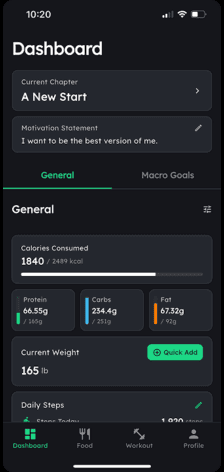
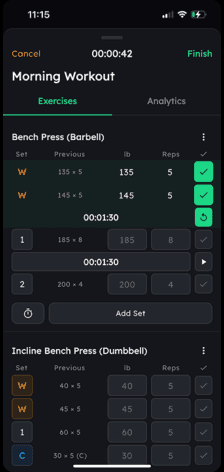
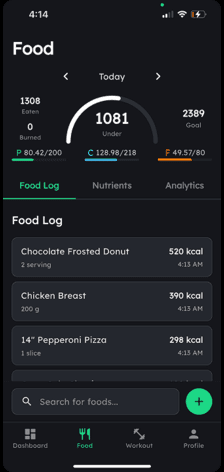
The warm-up feels heavy and panic sets in. Mofilo charts your strength history to prove the tissue is still there.
No commitment · Cancel anytime
How Nervous System Drive Fades Before Tissue Does
The brain acts as the ultimate governor of your physical output. Before a muscle fiber can contract, the central nervous system has to send a signal demanding that action. When you are eating at maintenance calories or in a surplus, the brain willingly recruits your largest, strongest motor units to move a heavy barbell.
A calorie deficit changes that willingness.
Your body registers a sustained lack of food as a systemic stressor. To protect its remaining energy reserves, the brain subtly pulls back on the throttle. A calorie deficit reliably increases neuromuscular fatigue and blunts the central nervous system's drive to the working muscles (Kercher et al., Sports 2025).
This neural blunting is why the weights feel inexplicably heavy the moment you unrack them. The tissue is capable of moving the load, but the brain is actively limiting the signal strength. You might still complete the set, but your perceived exertion is significantly higher. A set that felt like a moderate effort last month now feels like a maximum effort.
Sleep deprivation and daily life stress compound this effect heavily. When you combine a demanding job, poor sleep, and a calorie deficit, your nervous system is operating under a massive load before you even step foot in the gym. The barbell is just the final stressor that the system refuses to accommodate.
If you find your grip strength failing or your bar speed dropping rapidly on your warm-up sets, you are usually dealing with central fatigue. Your brain is simply protecting your remaining energy.
The Rate of Loss Threshold
The speed of your diet dictates the physical cost of your diet. A moderate deficit allows the body to pull energy from fat stores while leaving enough resources to support basic recovery. A severe deficit forces the body to look for energy wherever it can find it.
The speed at which you drop body weight dictates how much muscle mass and baseline strength you actually keep (Câmara, Revista ft 2025).
When you lose more than one percent of your body weight per week, the daily energy gap is often too large for fat oxidation to cover alone. The body turns to muscle tissue to bridge the gap. This is the point where temporary performance drops turn into actual tissue loss.
Your endocrine system also reacts aggressively to steep deficits. Hormones that support tissue repair plummet. Pushing the deficit too aggressively creates a severe energy shortage that rapidly suppresses testosterone and alters your anabolic hormone profile (Friedl et al., J Clin Endocrinol Metab 2026).
This hormonal shift makes recovering from heavy training nearly impossible. You enter your next workout still damaged from the last one. Over a few weeks, this accumulating damage forces your lifting numbers down.
Keeping your weight loss between a half pound and one pound per week provides the biological breathing room necessary to maintain your strength. It takes longer, but it protects the tissue you spent months building.
Why Your Body Weight Matters to the Bar
Lifting weights is an equation of physics and leverage. A heavier body provides a wider, more stable base of support. This is particularly noticeable on pressing movements and squats, where body mass actively contributes to moving the external load.
When you lose ten pounds of fat, your base of support shrinks.
As body weight drops, absolute strength often declines while relative strength actually improves (Campbell et al., J Funct Morphol Kinesiol 2020).
Absolute strength is the total weight on the bar. Relative strength is how much you are lifting compared to your new body weight. If a 200-pound lifter benches 300 pounds, they are lifting 1.5 times their body weight. If they cut down to 180 pounds and their bench drops to 285, they usually feel like they are failing.
In reality, their relative strength just increased to 1.58 times their body weight. They became a functionally stronger athlete.
Tracking relative strength prevents unnecessary panic. Certain lifts are highly sensitive to body weight changes. The overhead press and bench press usually suffer first as your chest and shoulders thin out, slightly increasing the range of motion. Conversely, exercises like pull-ups and deadlifts often hold steady or improve because you have less non-functional mass to maneuver.
Judge your progress by how your strength scales to your new, lighter frame.
The Four Levers to Stop the Slide
When your numbers start falling, you have four distinct variables you can adjust. The most common mistake lifters make is dropping the weight on the bar to perform higher rep sets. They chase the muscle pump because the heavy sets feel too difficult.
To preserve muscle mass in a deficit, maintaining the heavy load on the bar is significantly more effective than dropping the weight to keep high training volume (Glace et al., Research 2015).
Heavy tension is the primary reason your body holds onto muscle tissue. If you remove the heavy load, the body has no reason to keep the expensive tissue around. Your first lever is reducing volume, not intensity.
Cut your working sets by a third. Keep the weight heavy, but do fewer total repetitions to manage fatigue.
Your second lever is managing systemic stress.
Prolonged energy restriction elevates cortisol and other catabolic markers, meaning your capacity to recover from high-volume training is severely compromised (O'Leary et al., J Appl Physiol 2024).
Prioritizing sleep and taking an extra rest day between heavy sessions directly counters this cortisol response. A smaller workload done with high intensity yields better results than grinding through long sessions.
Your third lever is carbohydrate timing. Shifting your daily carbohydrate allowance to the meal directly before your workout can provide a temporary boost in local muscle energy, even while your total daily calories remain low. You give the working muscle fuel precisely when it needs it.
Your fourth lever is adjusting your expectations based on your lifting experience.
Your specific training age heavily influences how much strength you might lose, with advanced lifters facing a much harder time holding onto peak numbers than beginners (Refalo et al., Strength Cond J 2025).
A novice can often build strength while cutting. A ten-year veteran is doing exceptionally well just to maintain their numbers. Adjust your standards to match your reality.
Run your cut as a defined chapter.
Keep the heavy load on the bar. Drop a working set. Let the charts prove your strength is safely intact.
No commitment · Cancel anytime
How Your Strength Returns
The hardest part of a diet is trusting that the strength is still there. Many lifters abandon their cut early because they cannot tolerate the temporary dip in performance. They eat a massive surplus to feel strong again, undoing weeks of fat loss for a single good workout.
Patience yields better results.
The strength lost during a properly managed cut is rarely structural. You have not degraded the actual proteins that make up the muscle tissue. You have simply drained the fuel tanks and fatigued the nervous system.
Returning to maintenance calories rapidly refills intramuscular glycogen and restores the physiological mechanisms that drive peak strength output (Kerksick et al., J Int Soc Sports Nutr 2017).
Within a week or two of ending the diet, the water and carbohydrates flood back into the muscle belly. Your leverage improves immediately. The nervous system registers the abundant energy and stops limiting your motor unit recruitment.
Most lifters find their old numbers return within a few short weeks of eating at maintenance. Sometimes, because they are moving better at a lighter body weight, their relative and absolute strength both climb to new heights. The performance dip is just a temporary rental fee you pay for getting leaner.
Frequently Asked Questions
Does a drop in strength mean I am losing actual muscle tissue?
Not usually. Most day-to-day strength loss in a deficit comes from lower glycogen stores and nervous system fatigue. If your weight loss is slow and your protein intake is adequate, your actual muscle tissue is largely protected even if the bar feels heavy.
How much of a strength drop is considered normal during a diet?
A slight dip of five to ten percent on your heaviest compound lifts is common for intermediate and advanced trainees. Beginners might not see any drop at all, while highly competitive lifters expect a predictable dip as they peak for a lighter weight class.
Should I increase my daily calories if my lifts start falling?
Sometimes the better first step is to reduce your training volume. Before adding calories and slowing down your fat loss, try cutting your total working sets by a third. If the strength still free-falls, a small bump in carbohydrates might be warranted.
Can I still add weight to the bar while cutting?
Yes, particularly if you are newer to lifting or returning from a long break. Advanced lifters will find it much harder to add weight to the bar during a deficit and should focus primarily on maintaining their current numbers.
Why do my bench press numbers drop faster than my deadlift?
Pressing movements rely heavily on the stability and mechanical advantage provided by your body weight. Deadlifts often hold steady or improve because having a smaller waist can put you in a better mechanical position to pull from the floor.
What should I do if my strength stays low after the diet ends?
It usually takes two to three weeks of eating at maintenance for your glycogen stores to fully refill and your nervous system to recover. If your strength has not returned after a month of solid eating and recovery, you likely lost some tissue during the cut and need to transition into a slow building phase.
Conclusion
Navigating a calorie deficit requires accepting a certain amount of physical friction. Your lifts will likely feel heavier, and your stamina will drop before the session ends.
This is the normal biological response to having less energy in the system.
You need to separate your ego from the numbers on the bar for a few months. Track your relative strength, keep the weight heavy, and cut the unnecessary volume that only drives up fatigue. When the diet ends and the food returns, the strength that felt lost usually shows back up within weeks. The muscle was there the whole time; it just needed the fuel to show it.
All content and media on Mofilo is created and published for informational purposes only. It is not intended to be a substitute for professional medical advice, diagnosis, or treatment. Always seek the advice of your physician or other qualified health provider with any questions you may have regarding a medical condition, including but not limited to eating disorders, nutritional deficiencies, injuries, or any other health concerns. If you think you may have a medical emergency or are experiencing symptoms of any health condition, call your doctor or emergency services immediately.
Read more blogs
How to Handle Social Pressure When You Start Eating Healthy
What You'll Learn in 10 Min
- •Why your new diet makes old friends act defensive
- •Which 2 simple responses stop direct food pushback
- •How occasional compromise beats rigid macro tracking
A Structured Ramp-Up Protocol When You Have No Motivation to Workout After Vacation
What You'll Learn in 9 Min
- •Why lost drive is a metabolic shift, not willpower
- •How to drop total sets to prevent crippling soreness
- •Which low-intensity moves restore your nervous system
How to Maintain Muscle During a Two-Week Vacation From the Gym
What You'll Learn in 12 Min
- •Why early vacation size loss is just water and carbs
- •How restricting calories on a break speeds muscle loss
- •Which protein timing mistake costs you lean mass daily