Not Losing Weight in a Calorie Deficit While Strength Training: 4 Biological Causes
By Mofilo Team
Published 12 min read
Key Takeaways
- The number on the scale often stays flat because strength training builds muscle and stores water at the exact same time your body burns fat. This simultaneous exchange makes the scale a poor measurement tool for early body composition changes.
- Most weight loss stalls fall into two categories, either masked fat loss from water retention or an actual erased deficit from metabolic adaptation. Fixing the plateau requires identifying whether your body is holding fluid or burning fewer daily calories.
- Standard scales track total mass without differentiating between a pound of fat lost and a pound of water gained. Measurements like waist circumference and gym performance tell a much clearer story about your progress than gravity alone.
- Adequate protein intake during a diet keeps the weight you lose strictly localized to body fat. Dropping calories without keeping protein high ensures a significant portion of the scale drop will just be lost muscle tissue.
You step on the scale after three weeks of tracking every macro and hitting every workout, only to see the exact same number staring back at you. The initial reaction is usually a mix of anger and confusion. You assume the math is broken.
You worry your metabolism is ruined. The reality is far less dramatic and much more biological.
When you combine dietary restriction with resistance training, you create competing signals in the body. One signal tells the body to break down tissue for energy. The other tells the body to build and repair structural damage. Because fat, muscle, and water all share a single metric on a standard bathroom scale, progress often looks exactly like a plateau.
If you are genuinely eating less and lifting weights, you are almost certainly losing body fat. But fat loss does not always equal weight loss. We are going to look at the four biological reasons a calorie deficit plateau happens, how muscle and water manipulate the scale, and what actually matters for changing your physique.
Why the Scale Lies About Fat Loss
Standard scales measure your relationship with gravity. They do not measure your body composition. When you step on the glass square in your bathroom, you are getting a single aggregate number that represents bone, organ tissue, blood, muscle, fat, and whatever food is currently digesting in your gut.
When you start lifting weights while eating less, you are usually burning fat while simultaneously adding structural weight elsewhere. The body is highly adaptable. It will build the tissue it needs to survive the physical stress of the gym, even if total energy intake is low.
This is why total body mass is notoriously bad at tracking actual fat loss compared to clinical models like DXA scans (Huang et al., Frontiers in Endocrinology 2022). A scale cannot tell the difference between a pound of newly synthesized muscle tissue and a pound of adipose tissue. It just registers the total load pressing down on the sensors. If you lose fat from your waist but add dense muscle to your legs and back, the scale will read zero progress.
This effect is most pronounced if you are relatively new to the gym. Untrained individuals have a highly elevated capacity to build muscle and lose fat at the exact same time (Kerksick et al., J Int Soc Sports Nutr 2018). The novelty of the lifting stimulus is so strong that the body prioritizes muscle growth despite the energy shortage.
This simultaneous body recomposition is the ideal scenario for fitness, but it is a psychological nightmare for people who only track scale weight. You might lose two pounds of fat in a month but gain two pounds of lean tissue from heavy squats and deadlifts. The net change on the scale is zero. The net change in how your clothes fit is massive.
Trusting only the scale during this phase leads to terrible decision making.
Lifters see the plateau, assume the diet is failing, and aggressively cut calories further. This usually ruins their training energy and halts the muscle growth that was actively improving their physique. The mirror and the fit of your jeans are far more accurate tools during the first six months of a lifting program.
Muscle Glycogen and the Water Weight Problem
Strength training fundamentally changes how your body stores and manages carbohydrates. When you lift weights, your muscles need local energy reserves to power through sets of squats and presses. They store this energy as a molecule called glycogen.
The structural reality of glycogen is that it requires a significant amount of water. Every gram of glycogen stored in human muscle tissue brings obligatory water along with it to maintain the molecule's shape (Kerksick et al., J Int Soc Sports Nutr 2018). This is a rigid biological requirement, not a variable you can control.
If you start a new lifting program, or increase your training volume, your muscles will adapt by pulling in more glycogen and more fluid to handle the new workload.
The body wants to be prepared for the next workout.
This localized water retention is completely normal. It can easily add three to five pounds of scale weight in a single week. It is not fat.
It is literally the fluid required to power your workouts, pump up the muscle bellies, and recover from training stress. This sudden influx of water entirely masks the fat you are concurrently losing from eating fewer calories. The fat is gone, but the water took its place on the scale.
Inflammation from muscle damage compounds this issue further. Resistance training creates microscopic tears in your muscle fibers. The body responds with acute inflammation to heal the damage, which pools even more fluid into the affected areas.
If your legs are sore from a heavy leg day, they are holding onto water weight. This fluid shift happens daily, making day-to-day scale readings practically useless for tracking true fat loss trends over short timeframes.

The proof the scale refuses to show.
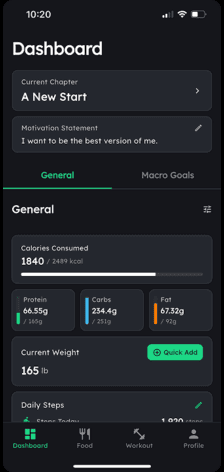
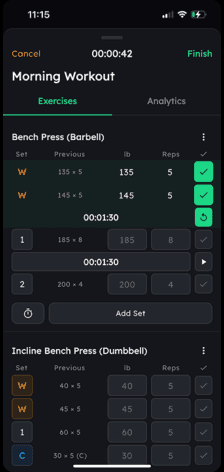
The number is stuck, but the mirror is different. Mofilo tracks your measurements and strength so your actual progress stays visible.
No commitment · Cancel anytime
Protein Prevents Muscle Loss
A calorie deficit is simply an energy shortage. Your body needs a certain amount of fuel to keep the lights on, and you are intentionally feeding it less than that amount. Without adequate protein, the body will pull that missing energy from both your fat stores and your muscle tissue.
Muscle is expensive for the body to maintain. It burns calories just existing. When food gets scarce, your body prefers to drop muscle tissue because it lowers your daily energy requirements. It is a survival mechanism that works directly against your aesthetic goals.
When you lift heavy and eat a high protein diet during energy restriction, you force the body to preserve its lean mass (Kim et al., Nutrients 2025). The mechanical tension from the weights tells the body the muscle is necessary for survival. The high protein intake provides the building blocks to repair it. This combination redirects the energy shortage squarely onto your fat stores.
This is exactly what you want for your long-term physique goals.
However, preserving muscle means keeping heavy, dense tissue on your frame. If you were eating a low-protein diet and doing zero resistance training, you would lose weight much faster. Fast weight loss is often just a combination of water loss and muscle wasting.
Slow weight loss while training hard is usually pure fat loss. People often get frustrated because a friend doing a juice cleanse drops ten pounds in two weeks, while they only drop one pound lifting weights. The person lifting kept their muscle and lost fat.
The person fasting likely lost a significant amount of the very muscle that gives a body its shape and metabolic rate. Do not trade fast scale drops for long-term muscle loss.
Adaptive Thermogenesis and the Calorie Deficit Plateau
Sometimes the scale is not hiding fat loss behind water or muscle growth. Sometimes the fat loss has actually stopped because the deficit no longer exists. This is a true calorie deficit plateau.
As you lose weight and restrict food for prolonged periods, your body naturally downregulates its daily energy expenditure through a process called adaptive thermogenesis (Tang et al., Frontiers in Nutrition 2025). This is not a broken metabolism. It is a highly efficient biological system doing exactly what it was designed to do to prevent starvation.
Your subconscious daily movement drops. You blink less, you fidget less, you take the elevator instead of the stairs, and you sit slightly deeper into your office chair. Your resting metabolic rate also drops slightly because you are carrying a physically lighter body around the house. It takes less energy to move a 180-pound body than a 200-pound body.
What was a 500-calorie deficit in week one might become a zero-calorie deficit by week eight, even if you are eating the exact same meals.
The math has not failed.
The baseline has simply shifted down to match your intake. To break this kind of plateau, you have to adjust the math. You either need to slightly decrease food intake again, or intentionally increase your daily movement outside the gym to drive your energy expenditure back up. Walking an extra ten thousand steps a day is often the easiest way to recreate the deficit without having to eat even less food.
Keep the deficit open without doing math.
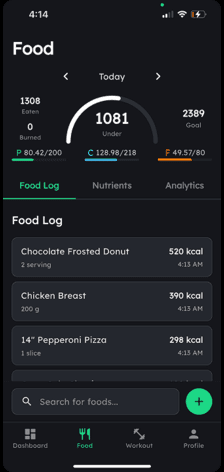
Week one's math will not work in week eight. Your weekly check-in recalibrates your targets so the fat loss keeps running.
No commitment · Cancel anytime
The Tracking Error Most Lifters Miss
The final biological reality is human error. Most lifters hit a wall simply because they are eating more food than they think they are. The diet feels hard, so they assume they are in a deficit, but the math tells a different story.
Dietary underreporting is incredibly common, and the magnitude of the error often completely erases the intended deficit for individuals attempting to lose weight (Ravelli and Schoeller, Front Nutr 2020). A heavy pour of olive oil, an untracked handful of almonds, or a weekend meal out easily pushes weekly calories back up to maintenance levels.
We naturally forget the bites, licks, and tastes we take while cooking dinner. We underestimate portion sizes when eating at restaurants because we cannot see the butter used in the pan. Over the course of a week, these small errors compound into thousands of hidden calories.
This creates a vicious psychological cycle. When the scale fluctuates wildly from water retention or poor tracking, it severely damages a dieter's psychological well-being and their ability to stick to the plan (Wharton et al., CMAJ 2020). You get frustrated because you feel like you are starving and working hard, but the scale refuses to move. You stop tracking accurately because the effort feels wasted.
The plateau then becomes a permanent reality.
Honesty in tracking is the only way out of this trap. Weighing your food on a digital scale for a few weeks recalibrates your eye and removes the guesswork that usually hides the missing deficit. Once the data is accurate, the weight loss usually resumes immediately.
Frequently Asked Questions
Does muscle gain hide fat loss on the scale?
Yes, especially in the first few months of a new training block. Muscle is denser than fat, meaning it takes up less space for the same amount of weight. If you gain a pound of muscle and lose a pound of fat, your body composition improves visibly.
Your clothes will fit looser, and you will look leaner in the mirror. However, gravity pulls on you with the exact same force, so the scale will not budge. This masked fat loss is the primary reason beginners get frustrated and quit prematurely.
Could water retention be affecting my weight?
Almost certainly. Resistance training causes micro-tears in your muscle tissue, which leads to local inflammation. The body's natural healing process requires fluid to transport nutrients to the damaged areas.
If your muscles are sore from a recent workout, they are holding onto water. And eating more carbohydrates on training days pulls water into the muscles alongside glycogen. This normal fluid shift can easily swing your scale weight by several pounds overnight, completely hiding a true fat loss trend.
What role do hormones play in weight loss plateaus?
Hormones manage how your body partitions energy, but they do not break the laws of thermodynamics. Chronic stress and poor sleep elevate cortisol, which often leads to increased water retention and poorer workout recovery. This makes the scale look stagnant.
Prolonged dieting also lowers thyroid output slightly, which reduces your daily calorie burn. While hormones influence the rate of progress and where you store fluid, a true calorie deficit will always result in tissue loss over time.
How often should I adjust my calorie intake?
Most people adjust their food intake far too quickly. Give a calorie target at least three to four weeks before making any changes. Daily scale fluctuations are just biological noise.
You need weeks of data to see the actual trend line through the water weight and digestive variations. If the scale has not moved in a month, and your gym performance is flat, then it is time to drop calories slightly or increase your daily step count.
Am I eating enough protein to support muscle growth?
A common target for lifters in a deficit is roughly 0.7 to 1 gram of protein per pound of target body weight. Hitting this mark consistently helps ensure the weight you eventually drop comes from fat stores rather than lean tissue. Without this baseline, you risk losing the muscle mass that drives your metabolic rate.
Is it possible my calorie tracking is inaccurate?
It is highly likely. Even experienced dieters underestimate their intake when they stop using a food scale. Eyeballing peanut butter, guessing the weight of chicken breasts, and forgetting to log cooking oils are the most common culprits.
A tablespoon of olive oil is roughly 120 calories. Being off by two tablespoons a day completely erases a standard fat loss deficit. If you are stuck, commit to weighing every single ingredient for one week to audit your actual intake.
Conclusion
The scale is a blunt instrument. It measures the total gravitational pull on your bones, fat, organs, muscle, and the water currently sitting in your tissues. When you add strength training to a calorie deficit, you fundamentally alter how your body holds onto lean mass and fluid.
Progress during a body recomposition phase rarely looks like a smooth downward slope. It looks like weeks of stagnant numbers followed by sudden, unpredictable drops. Fat is leaving, but water and muscle are constantly changing the math underneath the surface.
If your gym performance is improving, your clothes fit looser, and you are honestly tracking your food, the scale is likely just lagging behind reality. Give the biology time to work. Keep your protein high, train hard, and rely on your belt notches rather than the bathroom scale to tell you the truth about your progress.
All content and media on Mofilo is created and published for informational purposes only. It is not intended to be a substitute for professional medical advice, diagnosis, or treatment. Always seek the advice of your physician or other qualified health provider with any questions you may have regarding a medical condition, including but not limited to eating disorders, nutritional deficiencies, injuries, or any other health concerns. If you think you may have a medical emergency or are experiencing symptoms of any health condition, call your doctor or emergency services immediately.
Read more blogs
How to Handle Social Pressure When You Start Eating Healthy
What You'll Learn in 10 Min
- •Why your new diet makes old friends act defensive
- •Which 2 simple responses stop direct food pushback
- •How occasional compromise beats rigid macro tracking
A Structured Ramp-Up Protocol When You Have No Motivation to Workout After Vacation
What You'll Learn in 9 Min
- •Why lost drive is a metabolic shift, not willpower
- •How to drop total sets to prevent crippling soreness
- •Which low-intensity moves restore your nervous system
How to Maintain Muscle During a Two-Week Vacation From the Gym
What You'll Learn in 12 Min
- •Why early vacation size loss is just water and carbs
- •How restricting calories on a break speeds muscle loss
- •Which protein timing mistake costs you lean mass daily