How to Maintain Muscle During a Two-Week Vacation From the Gym
By Mofilo Team
Published 12 min read
Key Takeaways
- The immediate loss of size during a break comes from dropping water and stored carbohydrates, not actual muscle tissue. Returning to normal training and eating restores this volume within days.
- Eating enough calories to maintain your weight protects existing muscle better than restricting food to offset missed workouts. A caloric deficit without resistance training accelerates the loss of lean mass.
- Spreading your protein intake evenly across the day helps preserve muscle when you are not lifting. Most people default to eating the majority of their protein at dinner, which leaves muscles underfed for most of the day.
- High daily step counts help keep your muscles responsive to nutrients even when formal workouts stop. General activity acts as a baseline defense against tissue breakdown while traveling.
You spend six months painstakingly adding a noticeable layer of tissue to your shoulders and back. Then you book a fourteen-day trip with zero access to barbells. The day before the flight, the anxiety sets in. You look in the mirror and assume the next two weeks will erase the last two seasons of work.
Most lifters handle vacation breaks poorly. They either try to diet aggressively to make up for the lack of training, or they assume all is lost and abandon their nutritional habits entirely. Neither approach aligns with how human physiology handles a temporary pause in mechanical tension.
A two-week break from the gym does not trigger an immediate collapse of your muscular structure. The changes you notice in the mirror during those first few days are real, but they are not what you think they are. Muscle maintenance does not require a complex band workout in a hotel room. It requires a baseline understanding of what your body does when the lifting stops and how specific food and movement choices tell it to hold onto what you built.
Here is the protocol for keeping your results intact while actually enjoying your time away.
The Deflation Illusion
By day four of your vacation, you will look smaller. Your shirts will fit differently across the chest, and your arms will appear flatter. This is the exact moment most people panic and try to find a local gym.
The visual change is real. The assumption that you are losing muscle tissue is wrong.
Skeletal muscle is not just contractile protein. A significant portion of the muscle belly is filled with stored carbohydrates, known as glycogen, and the water required to hold that glycogen in the cell. Every gram of stored carbohydrate pulls roughly three grams of water into the muscle with it.
When you lift weights regularly, your body stores excess glycogen to fuel the repeated efforts. It is an adaptation to the demand. When you stop training for a few days, that demand disappears. Your body naturally downregulates the amount of glycogen and water it holds in the tissue.
Initial muscle size loss during detraining is due to glycogen and water depletion, not actual protein loss (Maltais et al., American Journal of Respiratory and Critical Care Medicine 2014).
You are watching your fuel tanks drain, not your engine shrinking. The contractile tissue remains entirely intact during this initial phase. The deflation is a temporary fluid shift.
Understanding this distinction changes how you experience a vacation. The flatness is unavoidable if you are not putting the muscle under tension, but it is also completely reversible. The moment you return home and resume your normal training volume and carbohydrate intake, the muscles will pull the water and glycogen back in.
The fullness returns within two to three days.
There is no reason to stress over a visual change that is purely chemical. The actual structural foundation you built over the last several months is far more resilient than a few days of missed workouts.
How Long It Actually Takes to Lose Tissue
If the first week is just water and glycogen loss, the obvious question is when the actual muscle tissue begins to degrade. The answer provides a lot of breathing room for a standard vacation.
The specific timeline for structural muscle atrophy during complete rest (Blocquiaux et al., Experimental Gerontology 2020). The data shows that significant reductions in myofiber size do not typically register until the two to three week mark of total inactivity.
A fourteen-day trip sits comfortably inside the safety window. Your body is highly efficient, but it does not dismantle expensive biological structures overnight simply because you missed a few workouts.
There is a nuance here based on your experience level. How training status (novice vs advanced) affects the rate of muscle loss (Borde et al., Sports Medicine 2015). Newer lifters tend to hold onto their newly acquired tissue quite stubbornly during a short break. Advanced trainees, who carry an amount of muscle mass that sits near their genetic ceiling, might experience very slight reductions slightly sooner.
This happens because that extreme amount of tissue requires a massive stimulus to justify its existence.
Even for the advanced lifter, a two-week pause does not erase years of progression. The loss at the fourteen-day mark is minimal and easily recovered.
This timeline assumes you are providing the body with a baseline reason to keep the tissue around. While you do not need to subject yourself to heavy squats, you do need to avoid sending the body a signal that food is scarce. The most common mistake people make on vacation actually accelerates the timeline of tissue loss. They try to diet.
Why Vacation Is the Wrong Time to Diet
Many people feel guilty about not training while traveling. To compensate for the lack of calorie expenditure in the gym, they deliberately restrict their food intake. They skip breakfast, order light salads, and try to maintain a strict caloric deficit to avoid gaining body fat.
This is a fundamental error in resource management.
When you are training hard, a calorie deficit forces the body to pull energy from its fat stores while the lifting stimulus tells it to spare the muscle. The mechanical tension is the protective signal. When you remove the mechanical tension of the gym, the protective signal is gone.
If you enter a calorie deficit without the stimulus of resistance training, the body looks for the easiest tissue to break down for energy. Muscle is expensive to maintain. If food is scarce and you are not using the muscle, it becomes the primary target.
Caloric deficits exacerbate muscle loss during training cessation (Brook et al., Acta Physiologica 2015).
The goal during a vacation is maintenance. You want to eat enough total energy to keep your body at its current weight. Maintenance calories signal to your system that the environment is abundant and there is no need to strip away lean mass.
Enjoy the local food. Eat the extra carbohydrates. The slight increase in calories often provides a restorative effect, dropping systemic fatigue and setting you up for a highly productive training block when you return. Trying to diet while sitting on a beach without a gym is the fastest route to actual regression.

A plan that protects your work.
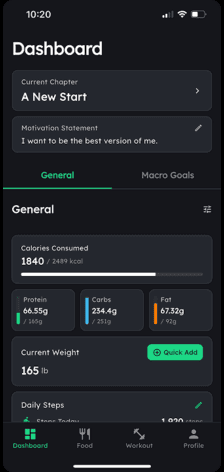
You feel guilty missing the gym, so you order a salad. Name this trip a maintenance chapter and eat enough.
No commitment · Cancel anytime
How Walking Protects Your Muscles
You do not have access to heavy barbells, but you are rarely completely sedentary on a trip. Most vacations involve exploring a new city, walking through airports, or hiking near a coast. This incidental movement plays a larger role in muscle preservation than most people realize.
When you stop exercising entirely, your muscles become less responsive to the protein you eat. This phenomenon is called anabolic resistance. The tissue simply stops efficiently using amino acids to repair and maintain itself.
Daily movement combats this drop in efficiency. High step counts protect against anabolic resistance during breaks from the gym (Morton et al., Current Opinion in Critical Care 2018).
You do not need to force a contrived hotel room workout with a luggage strap to get this benefit. The basic act of walking ten thousand to fifteen thousand steps a day keeps the blood flowing and the muscles moderately engaged. It maintains a baseline level of insulin sensitivity and keeps the tissue receptive to the nutrients you consume.
This is why active vacations often result in zero negative changes to body composition.
If your trip involves sitting on a resort chair for ten hours a day, you will need to be slightly more deliberate. Taking a brisk thirty-minute walk in the morning and another in the evening is usually enough to maintain that baseline signal. The goal is not to exhaust yourself, but simply to remind the local musculature that it is still being used to move your frame through space.
Why Protein Timing Matters More Than You Think
Hitting a specific macronutrient target while eating out for every meal is frustrating. You do not need to track every gram of chicken you consume on a trip, but keeping your total protein intake high is the most effective nutritional lever you have.
High protein intake protects against muscle loss during detraining or inactivity (Bauer et al., Journal of the American Medical Directors Association 2015).
A high protein intake provides the raw materials necessary to offset the natural breakdown of tissue that occurs every day. However, it is not just about the total number you consume. How you space that protein out matters significantly when you are not lifting.
During a normal training phase, the stimulus from lifting keeps the muscle-building machinery elevated for up to forty-eight hours. You can get away with a suboptimal meal schedule because the gym session is doing the heavy lifting. On vacation, that lingering stimulus is gone.
Even protein distribution is crucial for stimulating muscle protein synthesis when not training (Kim, Journal of Korean Diabetes 2025).
Most travelers eat a light carbohydrate-heavy breakfast, grab a quick sandwich for lunch, and then consume eighty grams of protein at a large dinner. This leaves the body without a meaningful dose of amino acids for the majority of the day.
The fix is straightforward.
Ensure your first meal of the day contains at least thirty to forty grams of high-quality protein. Do the same at lunch. This simple structural shift in how you order your meals provides multiple opportunities for the body to maintain its current tissue, independent of any exercise stimulus. You do not have to be perfect, but spreading the intake evenly gives your muscles the best chance of retention.
What Happens When You Return to the Gym
The real test of a vacation protocol is what happens during that first workout back home. You will likely feel a bit uncoordinated. The weights might feel marginally heavier, and you will almost certainly experience more soreness than usual in the days that follow.
This temporary drop in performance is neurological, not structural.
Your nervous system loses its sharp edge and movement efficiency when you stop practicing a specific lift. You did not lose the muscle, you just temporarily lost the ability to fire it with perfect synchronicity. Strength returns very quickly once the movement patterns are practiced again.
Even if a trip extended for a month and you genuinely lost a small fraction of lean tissue, regaining it is vastly easier than building it the first time.
Myonuclear permanence (muscle memory) facilitates rapid muscle regain after a break (Cumming et al., The Journal of Physiology 2024).
When you build muscle initially, your body adds new nuclei to the muscle cells to manage the larger size. When you stop training and the cell eventually shrinks, those extra nuclei do not disappear. They stick around for years, and potentially decades.
This means the cellular infrastructure remains in place. When you resume training, the body skips the costly and time-consuming process of creating new nuclei and simply fills out the existing framework. What took six months to build the first time often takes three weeks to restore. Knowing this allows you to actually relax while you are away.
Keep your protein high, log it fast.
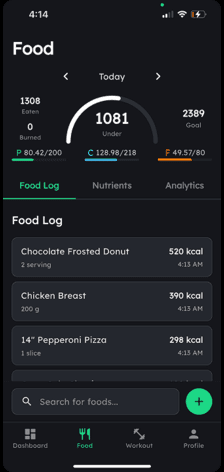
Spread your protein across the day. Voice-log your meals in seconds so you can put the phone away and relax.
No commitment · Cancel anytime
Frequently Asked Questions
Do I still need to count calories on heavy travel days?
You do not need to count every calorie, but you should aim to eat enough to maintain your body weight. Extreme travel days often lead to skipped meals, which can inadvertently put you in a severe deficit. Try to keep a rough mental tally of your meals to ensure you are not drastically under-eating while away from the gym.
Can I use bodyweight exercises to maintain my strength?
Bodyweight exercises can help maintain the habit of movement and provide a mild stimulus, but they are generally not heavy enough to maintain top-end barbell strength. Doing push-ups in your hotel room will not hurt, but for a short two-week trip, general activity like walking combined with adequate protein is usually enough to preserve your baseline tissue.
Will two weeks off ruin my progress if I am currently on a cut?
Taking a break from a cut is often beneficial. Shifting to maintenance calories for two weeks while on vacation gives your body a break from the fatigue of dieting. You will not lose fat during this time, but you will not lose muscle either. When you return, you can resume the deficit feeling refreshed.
How quickly should I jump back into my old weights?
Most people benefit from taking their first week back slightly lighter than their pre-vacation numbers. Dropping the weight by ten to fifteen percent allows your nervous system to re-adapt to the movement patterns without causing debilitating soreness. By the second week, you are usually ready to return to your previous working sets.
Does walking on the beach count as enough activity?
Walking on sand is actually more demanding than walking on pavement, which makes it an excellent form of incidental activity. If you accumulate a decent amount of steps throughout the day, it provides enough of a signal to keep your muscles responsive to the protein you eat. It easily checks the box for daily movement.
Conclusion
The anxiety of losing progress on vacation is usually worse than the actual physical changes. Your body adapts to what you consistently give it over months and years, not what you miss over a fortnight.
A two-week break from the gym is a blip in a long-term training career. The initial deflation you see in the mirror is just water and stored energy leaving the tissue. As long as you eat enough total calories to hold your weight steady, spread your protein out across the day, and walk enough to explore your destination, your muscle mass is remarkably safe.
What you do in the gym is part of the picture, but rest is the other half. Enjoy the trip, eat well, and know that the foundation you built will be right there waiting for you when you return to the rack.
All content and media on Mofilo is created and published for informational purposes only. It is not intended to be a substitute for professional medical advice, diagnosis, or treatment. Always seek the advice of your physician or other qualified health provider with any questions you may have regarding a medical condition, including but not limited to eating disorders, nutritional deficiencies, injuries, or any other health concerns. If you think you may have a medical emergency or are experiencing symptoms of any health condition, call your doctor or emergency services immediately.
Read more blogs
How to Handle Social Pressure When You Start Eating Healthy
What You'll Learn in 10 Min
- •Why your new diet makes old friends act defensive
- •Which 2 simple responses stop direct food pushback
- •How occasional compromise beats rigid macro tracking
A Structured Ramp-Up Protocol When You Have No Motivation to Workout After Vacation
What You'll Learn in 9 Min
- •Why lost drive is a metabolic shift, not willpower
- •How to drop total sets to prevent crippling soreness
- •Which low-intensity moves restore your nervous system
How to Keep Your Muscle on a Two-Week Vacation
What You'll Learn in 11 Min
- •What causes your muscles to look flat by day three
- •How daily walking beats random hotel room workouts
- •Why cutting calories to offset missed workouts fails