The Female Body Recomposition Timeline: How Long It Actually Takes
By Mofilo Team
Published 12 min read
Key Takeaways
- Muscle growth and fat loss happen on different biological schedules. Your nervous system adapts to lifting weights weeks before new muscle tissue actually forms.
- Scale weight hides progress by combining fat, muscle, and water into one number. Tracking waist measurements and gym performance tells you what is actually changing under the surface.
- A slight calorie reduction lets you build muscle while losing fat. Dropping calories too low strips away the energy your body needs to recover and grow.
- Daily protein intake supports the tissue repair process during a deficit. Most women under-eat protein and over-restrict calories when trying to change their physique.
You step on the scale after four weeks of consistent training, and the number has barely moved. Your jeans fit slightly differently, but the mirror shows the exact same physique you started with. You begin wondering if you are simply incapable of changing your body.
Female body recomposition is a process of simultaneous adaptation. You are asking your body to build new tissue while systematically breaking down stored energy. These two processes do not operate on the same timeline.
Most women abandon the process right before the physical adaptations become visible. They drop calories further or add excessive cardio out of frustration. That response usually halts the very progress they are trying to accelerate.
The timeline is predictable if you understand what is happening under the surface. We need to look at the exact mechanisms driving the change over the first three months. By knowing exactly when specific biological shifts occur, you can stop relying on the scale and start measuring the markers that actually matter.
Why Month One Looks Like Nothing Happened
The first four weeks of resistance training feel productive, but they rarely look productive. You show up, put in the effort, and get demonstrably stronger. You can lift heavier weights for more repetitions than you could on day one.
The visible muscle in the mirror, however, remains completely unchanged.
This delay is not a sign of a failed program. It is a biological requirement. When you start lifting weights, your brain and nervous system have to learn how to recruit existing muscle fibers. Before your body commits energy to building new tissue, it optimizes the tissue it already has.
The initial time course of strength gains is neural, explaining the lack of visible muscle growth in month one (Lecce et al., Journal of Physiology 2025).
Your nervous system becomes highly efficient at firing motor units in the correct sequence. The first time you perform a heavy squat, your body shakes. The movement feels uncoordinated because your muscles are fighting each other.
By week four, the bar path is smooth and you are lifting significantly more weight.
That rapid improvement happens because your brain learned to synchronize the firing of those muscle fibers. You are genuinely getting stronger, but you are not getting bigger yet. Many women mistake this invisible phase for a permanent plateau. They assume their genetics prevent them from building muscle.
The reality is that tissue adaptation simply requires more time than neural adaptation.
Muscle growth requires a sustained reason to occur. The tension from lifting provides the reason, but the actual construction of new proteins takes weeks to accumulate to a visible degree. Your body must break down dietary amino acids, transport them to the damaged muscle fibers, and weave them into new contractile units.
During this first month, the post-workout soreness you feel is just inflammation and minor tissue damage. It is not an indicator of immediate growth. Expect month one to be a period of neurological refinement. Your primary goal here is to establish the movement patterns and build the baseline strength required to stimulate real tissue changes later.
What to Expect by Month Three
Visible female body recomposition typically emerges between weeks eight and twelve. This is the window where neural adaptations level off and tissue adaptations become the primary driver of your strength gains.
The scale might still read the exact same number it did on day one.
This is the defining characteristic of recomposition. You are simultaneously losing fat and gaining muscle at roughly equal rates. If you lose two pounds of fat and gain two pounds of muscle, your total body weight remains static.
Clinical data provides a realistic benchmark for this timeline. Studies show average quantifiable changes in fat mass and lean mass over a standard 12-week resistance training intervention (Champ et al., European Heart Journal, Supplement 2025).
In practical terms, a woman might gain one to three pounds of muscle while dropping an equivalent amount of body fat over three months. Those numbers sound small until you realize muscle is significantly denser than fat.
Replacing three pounds of fat with three pounds of muscle dramatically alters the shape and firmness of a physique. Your waist circumference shrinks. Your clothes fit differently across the shoulders and hips. The softness around your midsection begins to tighten.
Relying on the scale during this phase is a mistake. It measures gravitational pull, not tissue composition.
Progress tracking requires different tools. Tape measurements around the waist, hips, and thighs provide objective data. Consistent photographs taken in the same lighting reveal changes that daily mirror checks obscure. Performance metrics in the gym confirm that the underlying machinery is improving.
If your lifts are going up and your waist measurement is going down, recomposition is happening. The process is working exactly as it should, even if the scale refuses to validate your effort.

Where your effort actually shows.
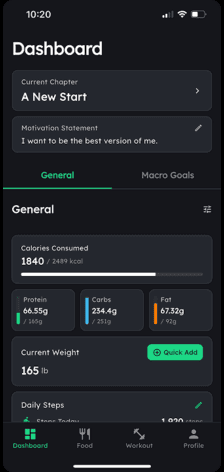
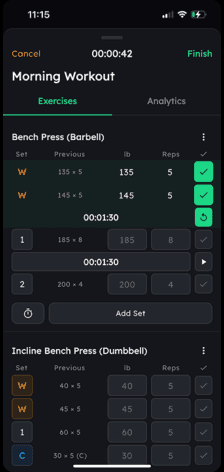
The scale is stuck but the mirror is changing. Chart your body measurements and strength gains to prove it is working.
No commitment · Cancel anytime
The Water Weight Illusion
A major source of frustration in female body recomposition is the daily fluctuation in scale weight. A woman can do everything correctly for three weeks, step on the scale, and see a three-pound increase overnight.
This sudden shift is almost always water.
Female physiology involves rhythmic hormonal shifts that directly influence fluid balance. As estrogen and progesterone levels rise and fall throughout the month, the body alters how it stores sodium and water. This creates an illusion of fat gain that derails many lifting programs.
Research clearly documents the impact of menstrual cycle phases on water retention and apparent body weight (Dillard et al., Advances in General Practice of Medicine 2025).
During the late luteal phase, right before menstruation begins, fluid retention peaks. The scale goes up. You feel softer or bloated. This is a temporary physiological state, not an accumulation of body fat.
Gaining three pounds of actual fat overnight requires consuming an excess of roughly ten thousand calories above your maintenance level. Unless you did that, the weight is water. Panicking and slashing calories in response to a luteal phase weigh-in is one of the most common ways women accidentally sabotage their muscle growth.
The fitness industry sometimes overcomplicates this by suggesting women need to drastically alter their workouts based on their cycle phase. Some programs advocate heavy lifting only during the follicular phase and light yoga during the luteal phase.
The evidence does not support this level of micromanagement. Recent analyses question whether follicular vs luteal phase-based training actually impacts long-term body composition.
Consistency matters more than timing. Training hard through your entire cycle yields better results than backing off for two weeks every month. You might feel slightly more fatigued during certain days, but your muscles still respond to tension.
Track your progress by comparing the same weeks of your cycle against each other. Compare week one of this month to week one of last month. That removes the water weight variable and reveals the actual tissue changes.
How Much You Should Actually Eat
Nutrition dictates which way the scale moves. Training dictates what the weight consists of.
To change your body composition, you have to balance two conflicting goals. You need a calorie deficit to burn fat, but you need adequate energy and building blocks to grow muscle. The size of the deficit determines whether recomposition is possible.
Many women default to a massive calorie reduction. They drop their intake to twelve hundred calories, assuming faster weight loss equals faster progress. This approach guarantees muscle loss.
A severe deficit forces the body to break down muscle tissue for energy. It also downregulates the biological pathways responsible for building new muscle. Current data explains why a small or mild energy deficit allows recomposition while a large deficit prevents muscle hypertrophy.
A mild deficit usually means eating two to three hundred calories below your maintenance level. This small gap forces the body to tap into stored fat for fuel without panicking and shutting down muscle repair.
Protein is the second half of the equation.
When you are in a calorie deficit, protein requirements go up. The body needs more amino acids to preserve existing muscle and construct new tissue in an energy-poor environment. Most women eating for weight loss drastically under-consume protein. They rely on salads and small portions of grains, missing the raw materials required for recovery.
Studies have identified the optimal protein intake range for supporting body recomposition during an energy deficit (Gwin et al., Nutrients 2020).
Aiming for roughly 1.6 to 2.2 grams of protein per kilogram of body weight provides a reliable target. For a one hundred and fifty pound woman, that means consuming between one hundred and ten and one hundred and fifty grams of protein daily.
Spreading this intake across three or four meals ensures a steady supply of amino acids in the bloodstream. It keeps the repair process running smoothly between workouts.
Stop starving your own progress.
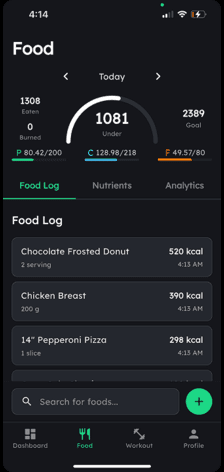
A massive deficit burns the muscle you want. Get a mild calorie target and high protein floor to ensure recovery.
No commitment · Cancel anytime
The Sleep Deficit Penalty
Recovery is where the physical changes actually occur. You do not build muscle while lifting weights. The workout simply creates the demand.
Sleep is the most critical component of that recovery process. It is the period when your body clears out metabolic waste from your muscles and repairs damaged tissue. Shortchanging your sleep directly undermines your nutrition and training efforts.
When you sleep less than six hours a night, your body becomes less efficient at partitioning nutrients. It becomes more likely to store excess energy as fat and more likely to burn muscle tissue for fuel.
This is especially true when you are actively trying to lean out. Research highlights how sleep restriction negatively impacts body composition by increasing fat-free mass loss during a deficit.
Losing muscle while trying to improve your physique is the exact opposite of recomposition.
Poor sleep also elevates hunger hormones. Ghrelin levels rise, making you crave highly palatable, calorie-dense foods. At the same time, leptin levels fall, meaning your brain does not register fullness as quickly. This hormonal shift makes adhering to a mild calorie deficit exponentially harder.
You find yourself fighting intense cravings by mid-afternoon. That often leads to unplanned snacking that erases the slight calorie deficit you worked hard to maintain.
Treating sleep as a passive luxury is a mistake. It is an active variable in your progress. Securing seven to nine hours of quality sleep creates the biological environment necessary for tissue repair. If you are training hard and eating well but seeing no visual changes, your sleep habits are the most likely culprit.
Does Age Change the Timeline?
A common assumption is that body recomposition becomes impossible after a certain age. Women in their forties and fifties often notice a shift in how their bodies store fat, usually accumulating more around the midsection.
This shift is real. It is driven by the gradual decline of estrogen during perimenopause and menopause.
Lower estrogen levels can change fat distribution and make maintaining muscle mass slightly more difficult. However, a slight increase in difficulty does not mean the process stops working. The fundamental rules of tension, recovery, and protein intake still apply.
Older adults simply require a stronger stimulus to trigger the same degree of muscle growth. This phenomenon is known as anabolic resistance.
To overcome anabolic resistance, women over forty need to prioritize progressive overload in the gym and ensure their protein intake remains consistently high. Light weights and low protein will not provide enough of a signal to force adaptation.
Recent evidence confirms the ability of perimenopausal and postmenopausal women to achieve recomposition through resistance training.
The timeline might stretch slightly. It might take fourteen weeks to see the same visual changes a twenty-five-year-old sees in ten weeks. The work still pays off.
Building muscle during and after menopause is one of the most effective ways to preserve metabolic health, maintain bone density, and improve daily function. Your biology changes as you age, but it does not stop responding to physical demands. You just have to be more precise with your training intensity and your nutritional choices.
Frequently Asked Questions
Do I still need to count calories on heavy training days?
Calorie tracking provides data, but you do not necessarily have to change your targets every single day. Most women find better consistency by eating a stable average across the week. If you are constantly adjusting your intake based on your workout, it becomes harder to maintain the mild deficit required for gradual recomposition.
What kind of exercise is best for female body recomposition?
Resistance training is the foundation. Lifting weights creates the demand for new muscle tissue. Cardiovascular exercise is excellent for heart health and energy expenditure, but too much cardio without enough resistance training can make it harder to improve a skinny fat physique. A balanced approach prioritizes lifting three to four days a week.
Should I eat differently for body recomposition compared to weight loss?
Standard weight loss programs often focus purely on eating as little as possible to drop scale weight quickly. Recomposition requires enough food to support training. You need a much smaller calorie deficit and a significantly higher daily protein intake to ensure you are losing fat rather than muscle.
How long should I stay in a recomposition phase?
Most people see the best results by committing to a specific phase for twelve to sixteen weeks. After a few months of a mild deficit, diet fatigue usually sets in. Taking a diet break and eating at maintenance for a few weeks helps resolve lingering fatigue before you push for further progress.
Conclusion
Female body recomposition requires patience because you are running two distinct physiological processes at the same time. Building muscle is a slow, resource-intensive undertaking. Losing fat requires a consistent, mild energy shortage. Balancing the two means the scale will rarely give you the validation you want in the first few weeks.
Your nervous system adapts first, making you stronger before you look different. Tracking your measurements, your gym performance, and your protein intake provides a much clearer picture of what is actually happening.
Your body adapts to what you consistently give it. Better training, recovery, and nutrition eventually change the outcome. Give the process at least twelve weeks before deciding if a program works. The visual changes you are looking for usually happen right after the point where most people decide to quit.
All content and media on Mofilo is created and published for informational purposes only. It is not intended to be a substitute for professional medical advice, diagnosis, or treatment. Always seek the advice of your physician or other qualified health provider with any questions you may have regarding a medical condition, including but not limited to eating disorders, nutritional deficiencies, injuries, or any other health concerns. If you think you may have a medical emergency or are experiencing symptoms of any health condition, call your doctor or emergency services immediately.
Read more blogs
How to Handle Social Pressure When You Start Eating Healthy
What You'll Learn in 10 Min
- •Why your new diet makes old friends act defensive
- •Which 2 simple responses stop direct food pushback
- •How occasional compromise beats rigid macro tracking
A Structured Ramp-Up Protocol When You Have No Motivation to Workout After Vacation
What You'll Learn in 9 Min
- •Why lost drive is a metabolic shift, not willpower
- •How to drop total sets to prevent crippling soreness
- •Which low-intensity moves restore your nervous system
How to Maintain Muscle During a Two-Week Vacation From the Gym
What You'll Learn in 12 Min
- •Why early vacation size loss is just water and carbs
- •How restricting calories on a break speeds muscle loss
- •Which protein timing mistake costs you lean mass daily