The Real Reason You Keep Restarting Your Fitness Journey
By Mofilo Team
Published 12 min read
Key Takeaways
- Consistency breaks down when motivation relies on guilt rather than internal alignment. Shifting your focus from punishment to autonomy keeps you engaged longer.
- Most missed workouts stem from either schedule friction or rigid expectations. Fixing your daily cues and dropping the need for a perfect streak solves both.
- A decent workout you actually enjoy beats a flawless routine you dread. How you feel during the session predicts whether you will return to the gym next week.
- Treat a missed week as a minor pause instead of a total failure. Giving yourself grace gets you back under the bar faster than criticizing your lack of discipline.
You buy new shoes, map out a fresh template, and swear this time will stick. For three weeks, you execute perfectly. Then a late meeting forces you to skip a Tuesday, a weekend trip wipes out your meal prep, and by the following Monday, the entire routine feels dead.
This boom-and-bust cycle leaves you feeling fundamentally broken. You watch other people just do the work and wonder what invisible discipline they possess that you lack.
The answer is usually not willpower. Most people who maintain fitness consistency have simply built a system that survives friction. They do not rely on perfect conditions.
They expect things to go wrong and have a baseline protocol for when they do. Understanding why you quit requires looking at the invisible rules you set for yourself.
Fitness consistency is not a personality trait you are born with. It is a set of skills you practice. When you view starting over as a moral failure, you drain the exact energy you need to get back on track.
The cycle of quitting and restarting happens because your approach is too rigid to survive a normal human life. To stop starting over, you have to change how you define success.
The Perfect Streak Illusion
The most common trap in any new fitness endeavor is the belief that success requires an unbroken chain of effort. You set a goal to work out five days a week. You hit that goal for the first two weeks.
On week three, you sleep poorly and miss a session. Instead of accepting the four completed workouts as a solid week of training, you view the entire week as a failure.
This is a well-documented behavioral phenomenon. When people operate under rigid rules, a single slip often triggers a complete collapse in effort. The mindset shifts from trying to do well to assuming the effort is already ruined.
This all-or-nothing thinking turns a minor scheduling conflict into a reason to abandon the gym entirely for a month. Researchers note that rigid restraint and the subsequent abstinence violation effect play a massive role in exercise relapse.
The fix requires abandoning the streak mentality. A streak is a fragile metric. It only measures consecutive days, not total volume or long-term progress. If you train a hundred days out of the year, you will see massive changes in your body and health.
It does not matter if those hundred days were perfectly spaced or if they included a two-week gap in July. Your muscles do not care about your calendar streak. They only respond to the total stimulus applied over time. Dropping the expectation of perfection allows you to absorb missed days without losing your momentum.
Why Guilt Fails as a Long-Term Strategy
Many people start a fitness journey from a place of deep self-criticism. You look in the mirror, dislike what you see, and use that negative emotion as fuel to get to the gym. For a few weeks, guilt works remarkably well as a motivator. It gets you out of bed early and pushes you through difficult sets.
But guilt is an exhausting emotion to carry. Eventually, the psychological weight of hating your starting point becomes heavier than the desire to change it. Doing things because you feel you have to, rather than because you want to, creates internal resistance.
Over time, the gym becomes a place of punishment rather than a place of progress. Psychological models show that autonomous motivation, where actions align with your personal values, is a far stronger predictor of long-term adherence than controlled motivation driven by guilt or pressure (Ntoumanis and Moller, Psychology of Sport And Exercise 2025).
Shifting from controlled to autonomous motivation requires changing the narrative in your head. Instead of working out to burn off a bad meal, you work out to feel stronger. Instead of training because you hate how your clothes fit, you train because you want the energy to play with your kids. The action remains exactly the same.
The internal framing changes entirely. When you align your training with a positive identity rather than a negative correction, the friction of going to the gym drops significantly. You stop negotiating with yourself because the activity now serves a purpose you actually care about.

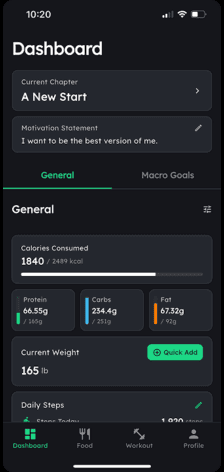
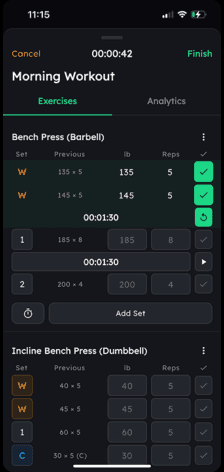
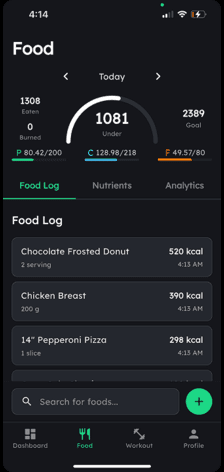
Motivation that survives a missed Tuesday.
You miss a day and assume the routine is ruined. Mofilo puts your real reason front and center before you log.
No commitment · Cancel anytime
How Fast Do You Actually Lose Progress
A major reason people quit after a short break is the false belief that all their hard work has evaporated. You catch a cold, take seven days off, and suddenly feel soft. You step on the scale and see a different number. You assume the muscle you built over the last two months is gone, which makes going back feel pointless.
This feeling is mostly an illusion. When you stop training, your muscles store less glycogen and water. They look flatter and feel softer.
This happens within a few days, but it is not a loss of actual tissue. It is just a change in fluid balance. True physiological detraining, including significant drops in aerobic capacity and muscle strength, takes much longer to occur than most people realize (Cassemiliano et al., Journal of Aging and Physical Activity 2024).
Knowing this timeline changes how you handle a lapse. A missed week is physically meaningless in the grand scheme of a year.
When you return to the gym, that lost glycogen replenishes after your very first workout. The pump returns. The strength is still there, perhaps requiring just a single session to shake off the neurological rust. Understanding that your progress is durable protects you from the despair that usually causes a one-week break to turn into a six-month hiatus.
Building the Habit Without Willpower
Willpower is a terrible tool for building fitness consistency. It fluctuates based on your sleep, your stress levels, and how much coffee you had. If your entire plan relies on white-knuckling your way to the gym at five in the morning, you will eventually fail. The people who look the most disciplined are usually just the people who rely on discipline the least.
They have built systems that make the behavior automatic. Automaticity happens when a specific cue consistently triggers a specific behavior without requiring conscious decision-making. Setting up clear cue-behavior associations removes the need to negotiate with yourself every time you need to train (Wood and Rünger, Annual Review of Psychology 2015).
Creating a reliable cue means tying your workout to something that already happens every day. You do not just resolve to work out more. You resolve to change into your gym clothes the exact moment you shut your laptop at the end of the workday. The laptop closing is the cue.
Over time, the brain links the cue to the routine. You stop asking yourself if you feel like working out. You simply follow the sequence. By outsourcing the initiation of the workout to an environmental trigger, you bypass the part of your brain that tries to talk you out of doing hard things.
Why Harder Workouts Aren't Always Better
The fitness industry heavily markets the idea of suffering. You are told that if you are not crawling out of the gym, you did not work hard enough. For a beginner, this is a toxic message. It sets the expectation that every workout must be a painful trial of character.
If you genuinely dread the physical sensation of your workouts, your brain will eventually find a way to make you stop doing them. The affective response you experience during a session is a primary driver of whether you will stick with a program. Put simply, if the exercise elicits higher enjoyment, you are far more likely to maintain the habit long-term (Thum et al., PLoS ONE 2017).
This does not mean your workouts should be easy. It means you need to find a style of hard work that you actually find rewarding.
Some people love the heavy, slow tension of a barbell squat. Others hate it but thrive on the fast-paced environment of a circuit class. If you are constantly quitting, you might just be forcing yourself into a modality you hate. Give yourself permission to run, row, lift, or climb based on what leaves you feeling accomplished rather than just destroyed.
The Role of the People Around You
Fitness is often framed as a solo pursuit. You put your headphones on, block out the world, and grind. While this works for highly experienced lifters, isolation is a massive vulnerability when you are trying to establish a new routine.
When you train alone, no one knows if you skip a day. The only person you let down is yourself, and human beings are remarkably good at rationalizing their own excuses.
Bringing other people into your process changes the stakes. Knowing that a friend is waiting for you at the squat rack makes it significantly harder to hit snooze. The data on human behavior confirms that integrating social support into a fitness routine dramatically improves long-term adherence (Eynon et al., Scandinavian Journal of Medicine and Science in Sports 2019).
You do not need to join a massive group class to get this benefit. A single training partner is enough. Even a text thread with a friend where you both log your completed workouts provides a layer of external accountability.
When your internal drive dips, the external structure of your social circle catches you. Over time, the shared experience of getting stronger cements the habit deeper than any solo endeavor could.
How to Recover From a Missed Week
Eventually, life will derail your routine. You will get sick, travel for work, or simply have a week where everything goes wrong. How you handle this exact moment determines whether you are taking a brief pause or starting the boom-and-bust cycle all over again. Most people respond to a lapse with harsh self-criticism.
They tell themselves they are lazy and lack discipline. This reaction actually paralyzes you. Studies show that individuals who practice self-compassion after a lapse are much faster to return to their exercise routines than those who rely on self-criticism (Shtern et al., Journal of Health Psychology 2026). Grace gets you back in the gym; guilt keeps you on the couch.
The ultimate goal is to shift how you see yourself. When you are just someone trying out a new program, a missed week feels like the end of the experiment.
When you build an identity as a person who trains, a missed week is just a normal part of a lifelong pursuit. Establishing this long-term exercise identity is what separates people who maintain physical activity from those who constantly start over (Kwaśnicka et al., Health Psychology Review 2016). You do not need to restart your journey. You just need to pick up the weights again.
Build the habit without the shame cycle.
Drop the perfect streak. Your purpose shows up before every session, so one missed week stops triggering a six-month quit.
No commitment · Cancel anytime
Frequently Asked Questions
Does a missed workout ruin my progress?
Missing a single workout has zero measurable impact on your long-term progress. Your body adapts to the total volume and intensity of your training over weeks and months, not days. Most of the time, an unexpected rest day actually allows for better recovery, meaning you come back stronger for your next session.
How do I get motivation back after stopping?
You do not wait for motivation to return before you start working out again. Motivation usually follows action, not the other way around. Commit to a very small, manageable session just to break the inertia. Doing a light twenty-minute workout bridges the gap and reminds your brain that you are still in the game.
Should I force myself to train if I feel burnt out?
If you are genuinely exhausted from lack of sleep or high life stress, forcing a heavy workout usually just creates more fatigue. However, if you are just feeling mentally resistant, a lighter session often helps. The goal is to keep the habit alive without digging a deeper recovery hole.
How many days a week do I actually need to train?
Most people see excellent progress training three to four days a week. Trying to force a six-day protocol when your schedule only comfortably allows for three is a setup for failure. Consistency on a three-day program will always yield better results than a six-day program you abandon after a month.
Why do I always quit around the three-week mark?
Week three is usually when initial enthusiasm fades and accumulated fatigue peaks. The novelty of the new routine is gone, but the habit has not fully formed yet. Expecting this exact dip in motivation allows you to plan for it. Rely on your environmental cues and social support to push through this specific window.
Conclusion
The cycle of starting and stopping is exhausting. It drains your confidence and makes the basic act of moving your body feel like a complex moral test. Breaking this pattern requires letting go of the pristine, flawless version of your fitness plan.
Real progress is messy. It involves missed days, modified workouts, and weeks where you just do the bare minimum to keep the habit alive.
Your body adapts to what you consistently give it over the long haul. A flexible system that absorbs the friction of daily life will always outperform a rigid system that shatters at the first sign of stress. You do not need more willpower or a harsher inner critic. You just need to accept that a decent workout done today is worth more than a perfect workout planned for tomorrow.
All content and media on Mofilo is created and published for informational purposes only. It is not intended to be a substitute for professional medical advice, diagnosis, or treatment. Always seek the advice of your physician or other qualified health provider with any questions you may have regarding a medical condition, including but not limited to eating disorders, nutritional deficiencies, injuries, or any other health concerns. If you think you may have a medical emergency or are experiencing symptoms of any health condition, call your doctor or emergency services immediately.
Read more blogs
How to Handle Social Pressure When You Start Eating Healthy
What You'll Learn in 10 Min
- •Why your new diet makes old friends act defensive
- •Which 2 simple responses stop direct food pushback
- •How occasional compromise beats rigid macro tracking
A Structured Ramp-Up Protocol When You Have No Motivation to Workout After Vacation
What You'll Learn in 9 Min
- •Why lost drive is a metabolic shift, not willpower
- •How to drop total sets to prevent crippling soreness
- •Which low-intensity moves restore your nervous system
How to Maintain Muscle During a Two-Week Vacation From the Gym
What You'll Learn in 12 Min
- •Why early vacation size loss is just water and carbs
- •How restricting calories on a break speeds muscle loss
- •Which protein timing mistake costs you lean mass daily