Why Your Calorie Deficit Stopped Working in Perimenopause
By Mofilo Team
Published 10 min read
Key Takeaways
- Perimenopause alters how your body partitions nutrients and stores fat. Declining estrogen shifts fat storage toward the midsection while lowering your resting energy expenditure.
- Dietary protein and resistance training are the two primary levers for preserving muscle during this transition. Women need a higher protein floor and heavier, lower-volume lifting to overcome age-related anabolic resistance.
- A massive calorie deficit paired with high training volume usually backfires. The combination of under-eating and over-training spikes stress hormones and accelerates muscle loss rather than burning fat.
- Recovery must become a measurable part of your routine. Declining estrogen slows muscle repair, meaning progress requires more targeted rest between heavy sessions.
You drop your food intake back to the exact number that always worked. You add a fourth lifting day to your week to push the scale. Three weeks later, your weight has not moved, but your midsection feels softer and your joints ache.
This is the most common entry point into midlife fitness frustration. Women who have spent years successfully managing their body composition suddenly find their reliable methods completely ineffective.
Entering a perimenopause calorie deficit often feels like trying to unlock a door after someone changed the locks. The frustration is entirely valid. The physiological landscape of your body is shifting.
Many lifters assume they have simply lost their discipline. They try to cut calories further or run more miles. This usually makes the problem worse.
You do not have to start over from scratch. You simply need to adjust the levers. The same mechanisms that build muscle and burn fat still apply. They just require different inputs now that your hormonal profile is changing.
Why Your Old Calorie Target Suddenly Fails
The first instinct when a diet stops working is to blame tracking errors. You might assume you are sneaking extra bites or miscalculating portion sizes. While human error is always possible, a more fundamental shift is happening beneath the surface.
Your daily energy expenditure is no longer what it was five years ago. This drop is not just a byproduct of moving less as you get older. There is an independent effect of perimenopause on resting energy expenditure, separate from chronological aging (Ko and Kim, Nutrients 2020).
Your body now burns slightly fewer calories at rest.
This means the 1,600-calorie target that used to put you in a reliable deficit might now be your maintenance level. Continuing to eat at that number will stall your progress indefinitely. You have to recalculate your baseline using your current metrics, not your historical data.
Simultaneously, the way your body stores energy begins to change. For decades, estrogen directed fat storage primarily toward the hips and thighs. As those hormone levels fluctuate and decline, the map changes.
Research clearly tracks how the hormonal changes of perimenopause specifically alter body fat distribution (Ko and Kim, Nutrients 2020).
Fat begins to accumulate centrally around the abdomen.
This visceral fat shift is particularly frustrating for women who lift. You can maintain your strength and your lean mass in your legs, yet feel completely different in how your clothes fit. The mirror reflects a change in shape even if the scale remains perfectly static.
Understanding this dual shift is the first step in adjusting your plan. You are fighting a slight decrease in metabolic rate alongside a relocation of body fat. The solution is not to starve yourself, but to change how you signal your muscles to grow.

Targets that fit the body you have.
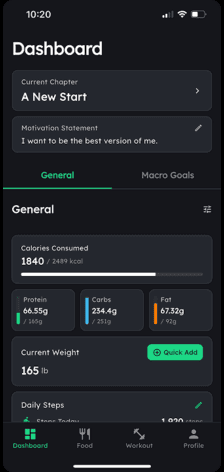
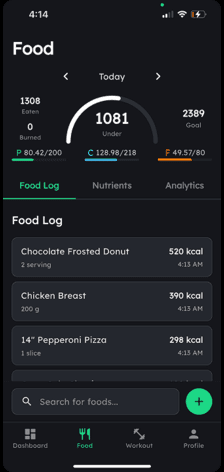
The math you trusted stopped fitting. Mofilo recalibrates your numbers weekly based on actual results, bringing your effort and reality back together.
No commitment · Cancel anytime
The Anabolic Resistance Problem
Most women who strength train already know they need protein. They track their chicken breast and mix their whey shakes. But the mathematical rules for muscle preservation change in your forties.
Your body becomes less efficient at extracting the amino acids from your food and turning them into new muscle tissue.
Sports scientists document the emergence of anabolic resistance to dietary protein in middle-aged and perimenopausal women (Sims et al., J Int Soc Sports Nutr 2023).
Think of this resistance like a volume dial on a speaker that has been turned down. To get the same output, you have to push a stronger signal through the system. Eating 20 grams of protein in a sitting might have been enough to trigger muscle growth in your twenties. Now, that same 20 grams barely registers as a signal to build tissue.
To overcome this inefficiency, you need to raise your protein floor. Hitting 30 to 40 grams of high-quality protein per meal becomes the new baseline. This higher threshold ensures enough leucine enters your bloodstream to flip the switch for muscle repair.
Total daily intake matters just as much. Aiming for 1.8 to 2.2 grams of protein per kilogram of body weight provides the raw materials needed to hold onto lean mass during a cut.
Timing also takes on a new level of importance. Stacking all your protein at dinner leaves your muscles underfed during the day. Spreading your intake across three or four substantial meals keeps the repair signals active from morning until night.
This higher protein intake serves a secondary purpose during a deficit. It requires more energy to digest than carbohydrates or fats, and it provides superior satiety. When your calories are restricted, feeling full is a primary defense against abandoning the plan entirely.
Why You Need to Lift Heavier and Less Often
When the scale stops moving, the standard reaction is to increase output. You add an extra set to every exercise. You tack on twenty minutes of cardio after lifting. You try to force progress through sheer volume.
This approach reliably backfires during the menopausal transition.
High-volume training creates a massive amount of central fatigue. Your body is already navigating hormonal fluctuations. Piling high-repetition exhaustion on top of that stress leaves you drained rather than adapted.
The literature strongly supports the superiority of high-intensity, lower-volume heavy resistance training for bone and muscle preservation in menopausal women (Juppi et al., J Clin Med 2020).
Heavy weight provides a clear, unmistakable reason for your body to keep its muscle.
Instead of doing four sets of fifteen repetitions on a leg press, shift to three sets of six to eight repetitions. The load should feel genuinely challenging by the final rep. If you could easily perform three more repetitions, the weight is too light to drive adaptation.
Lowering the volume protects your energy reserves. You spend less total time under tension, which reduces the systemic stress of the workout. The goal is to stimulate the tissue, not to annihilate it.
This shift in training style also protects your skeletal health. Heavy loading provides the mechanical stress required to maintain bone density. High-repetition, light-weight circuits simply do not offer the same protective benefit.
You might feel like you are doing less work. The session might end faster. But the quality of the signal you are sending to your muscles is vastly superior for the physiological state you are in.
How Stress Replaces Calories as the Primary Barrier
Creating a massive energy gap is a common tactic for quick weight loss. Slashing 500 or 600 calories a day yields rapid results for younger lifters. In midlife, that same aggressive cut often brings fat loss to a complete halt.
Your body interprets a severe lack of food as an environmental threat.
When you pair that severe restriction with intense gym sessions, your adrenal system works overtime. Clinical reviews highlight the synergistic effect of caloric restriction and exercise stress on cortisol levels and body composition (Sims et al., J Int Soc Sports Nutr 2023).
Chronically elevated cortisol changes how your body handles fuel. It promotes the breakdown of muscle tissue for quick energy. It also encourages the storage of incoming calories as visceral fat around your organs.
You end up in a frustrating cycle. You are eating very little and training hard, yet your body composition is slowly getting worse.
The solution is to shrink the size of your deficit. A moderate reduction of 200 to 300 calories below maintenance is enough to drive fat loss without triggering the cortisol cascade. This smaller gap keeps your daily spontaneous movement levels high, which burns more total calories than a single gym session anyway.
This smaller deficit requires patience. The scale will move slower. But the weight you lose will actually be fat, and the muscle you have worked hard to build will remain intact.
Managing non-exercise stress becomes a critical part of the plan. High-stress jobs, family demands, and daily anxiety all contribute to your total allostatic load. Your body does not differentiate between the stress of a heavy deadlift and the stress of a missed deadline.
Run a cut that respects your recovery.
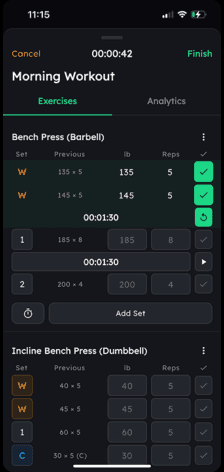
Set your high protein floor. Mofilo manages the exact calorie math after each check-in, freeing you to focus entirely on lifting heavy.
No commitment · Cancel anytime
Why Your Recovery Requires More Attention
Recovery is often treated as an optional luxury. Lifters prioritize the workout and assume the healing will happen automatically in the background. That assumption fails when your hormonal environment changes.
Estrogen is heavily involved in the repair of muscle tissue. It helps manage inflammation and activates satellite cells that rebuild damaged fibers.
As those hormone levels drop, you lose some of that built-in repair capacity. Researchers note how declining estrogen alters muscle damage and recovery kinetics post-resistance exercise (Sims et al., J Int Soc Sports Nutr 2023).
You will likely experience delayed onset muscle soreness for a longer duration. A heavy leg session that used to take two days to recover from might now require three or four.
Ignoring this shift and forcing another heavy workout before you have healed leads directly to overtraining.
Sleep is the primary environment where this recovery happens. Unfortunately, perimenopause often disrupts sleep architecture. Night sweats and anxiety can fragment your rest, leaving you under-recovered before you even step into the gym.
Protecting your sleep becomes a non-negotiable component of a successful cut. This means maintaining a cool sleeping environment and setting a strict schedule.
It also means reevaluating your alcohol intake. A glass of wine might help you fall asleep, but it destroys the deep, restorative phases of sleep your muscles need to repair. When recovery is already compromised by lower estrogen, regular alcohol consumption makes progress significantly harder.
Frequently Asked Questions
Does perimenopause mean I need more protein?
Yes. Your body becomes less efficient at using the protein you eat to build and repair muscle. Bumping up your daily target helps overcome this inefficiency and protects your lean mass during a diet phase. Spreading that protein out into portions of at least 30 grams per meal ensures you stimulate muscle repair multiple times a day.
How does sleep impact weight loss during perimenopause?
Poor sleep drives up hunger hormones and reduces your daily spontaneous movement. It also limits the recovery needed from heavy lifting. When sleep is fragmented, staying in a calorie deficit feels significantly more difficult, and chronically elevated cortisol can make your body more resistant to utilizing stored fat.
Should I reduce my training volume in perimenopause?
Most women benefit from dropping the total number of sets and reps while increasing the weight. Heavy, low-volume lifting provides a stronger signal for bone and muscle health without creating excess fatigue. Pushing high-repetition sets often generates too much central nervous system fatigue without delivering enough mechanical tension to force adaptation.
Can alcohol really stop my fat loss in perimenopause?
Alcohol itself does not pause fat loss indefinitely, but it heavily disrupts sleep and recovery. In a phase where muscle repair is already compromised by lower estrogen, regular alcohol consumption makes holding onto muscle much harder. It also frequently triggers night sweats, further degrading the quality of your rest.
Is a smaller calorie deficit better for perimenopausal women?
Aggressive cuts often backfire by spiking stress hormones and accelerating muscle loss. A moderate deficit of 200 to 300 calories is usually more effective for long-term body composition changes. This requires patience and a willingness to track metrics like strength and measurements, rather than relying entirely on rapid scale drops.
Conclusion
You do not have to accept a softer midsection or a sudden loss of strength just because your hormones are changing. What worked in your thirties might be failing you now, but the underlying mechanics of human physiology remain intact.
Your body still adapts to tension and recovers with food and sleep.
The shift requires you to be more precise with your levers. You need a slightly higher protein floor to trigger muscle growth. You need heavier weights to force adaptation without the exhaustion of high volume. You also need a smaller calorie gap to prevent stress hormones from stalling your progress.
Perimenopause is a transition, not an ending. Calibrate your approach to the body you have today, and the results will follow.
All content and media on Mofilo is created and published for informational purposes only. It is not intended to be a substitute for professional medical advice, diagnosis, or treatment. Always seek the advice of your physician or other qualified health provider with any questions you may have regarding a medical condition, including but not limited to eating disorders, nutritional deficiencies, injuries, or any other health concerns. If you think you may have a medical emergency or are experiencing symptoms of any health condition, call your doctor or emergency services immediately.
Read more blogs
Breastfeeding Macros: How to Lose Fat Without Dropping Your Milk Supply
What You'll Learn in 12 Min
- •How much of a calorie deficit protects milk volume
- •Why cutting carbs tanks your daily milk production
- •Which hormonal shifts trigger false nursing hunger
How to Keep Your Cut on a 10-Day Vacation Without Tracking
What You'll Learn in 8 Min
- •Why eating at maintenance primes future fat loss
- •What really causes that post-trip scale weight jump
- •How protein and walking replace calorie logging
24-Hour Shift Fueling: What to Eat When You Cannot Plan Your Day
What You'll Learn in 11 Min
- •How pre-shift carbs dictate your early morning energy
- •Why heavy 2 AM meals spike your blood sugar so fast
- •When small caffeine doses beat massive energy drinks