Why You Are Losing Strength While Cutting (And How to Fix It)
By Mofilo Team
Published 11 min read
Key Takeaways
- Strength loss during a fat loss phase usually stems from depleted energy stores and reduced leverage. The actual muscle tissue is rarely shrinking.
- Lifting performance drops come in two distinct forms, which are immediate fatigue and structural loss. Prioritizing heavy sets over high-rep exhaustion helps prevent the latter.
- Training to maintain muscle requires far less volume than training to build it. Dropping a few sets while keeping the weight heavy is usually a better trade than dropping the weight to finish the sets.
- Consuming most of your daily carbohydrates in the hours before and after your workout provides direct energy. This targeted fueling sustains heavy loads when total calories are low.
Week three of a calorie deficit is usually when the barbell starts feeling significantly heavier than it did last month. You step under a weight you could easily squat for eight reps a few weeks ago, but today the fifth rep is an absolute grind. The immediate assumption is that you are losing hard-earned muscle.
The mirror looks a little flatter. The logbook shows a decline. It feels like the progress you spent months building is dissolving just because you decided to lose some body fat.
Most of the time, that fear is misplaced.
Losing strength while cutting is common, but it rarely means your actual muscle tissue is shrinking. The environment inside your body has simply changed. A calorie deficit is a state of controlled restriction.
You are intentionally giving your body less energy than it needs to sustain its current mass. That restriction changes how your muscles store fuel, how your joints stabilize weight, and how your nervous system recruits motor units.
Understanding what happens under the hood makes the process less frustrating. You can stop panicking about lost tissue and start managing the actual variables that keep your numbers up. We are going to look at the mechanical and biological reasons your lifts regress during a fat loss phase, and what you can actually do to stabilize them.
The Difference Between Losing Muscle and Losing Leverage
There is a sharp distinction between a muscle getting smaller and a muscle losing its mechanical advantage. When you lose body fat, you physically change your geometry.
Fat is not just dead weight. It occupies physical space around your joints and between your muscle bellies. That space provides passive support during heavy compound movements.
A thicker waist creates a more stable base for a heavy squat. A thicker chest and back reduce the range of motion on a bench press while providing a wider platform against the pad. When that padding shrinks, the lift naturally gets harder.
You have to move the bar slightly further. Your joints have less passive compression wrapping them.
The angles of your limbs change minutely, forcing your muscles to produce force from slightly less advantageous positions.
This is why pressing movements usually suffer first. Bench press and overhead press numbers often drop weeks before deadlift or pull-up numbers show any decline. The loss of physical mass around the shoulder girdle removes leverage.
Conversely, exercises where your body weight is the resistance often improve. Your pull-ups might feel lighter even as your bench press struggles.
This divergence is a clear signal that your muscle tissue is intact. If you were truly losing contractile tissue at a rapid rate, every lift would drop uniformly.
The other structural change is water. Carbohydrates pull water into muscle cells. A calorie deficit usually involves fewer carbohydrates, which means your muscles hold less water.
This loss of intracellular fluid makes the muscle physically smaller and softer. It is the reason you look flat after a few weeks of cutting.
None of this means the actual muscle fibers are degrading. The engine is exactly the same size. It just has less structural reinforcement around it.

Proof the muscle is still there.
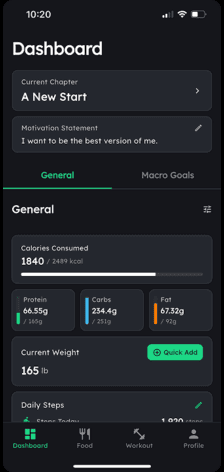
The mirror looks flat on a diet. Mofilo's strength charts prove the barbell stayed heavy even when your working sets dropped.
No commitment · Cancel anytime
Glycogen Depletion and the Output Drop
Beyond leverage, the most immediate cause of weakness is fuel availability. Your muscles run on glycogen during intense resistance training. Glycogen is simply stored carbohydrate.
When you eat in a surplus, your glycogen stores are topped off daily. Your muscles are full of easily accessible energy. When you shift into a calorie deficit, you are inherently taking in less energy and usually fewer carbohydrates. Because incoming fuel is scarce, your stored glycogen depletes faster than it can be restocked.
Training with low glycogen directly impacts your ability to sustain force.
The first rep or two of a heavy set might feel normal, but the drop-off happens much faster. You might hit the third rep and suddenly find nothing left in the tank. This is a localized energy crisis, not a loss of muscle mass. Your nervous system sends the signal to contract, but the localized fuel required to execute that contraction multiple times is missing.
Rest intervals become a major factor here. When glycogen is low, the cellular waste products of muscle contraction take longer to clear. If you stick to the exact same sixty-second rest periods you used during a bulk, your performance will tank.
You are asking a depleted muscle to recover at the speed of a fully fed one.
Managing this requires strategic carbohydrate placement. If your daily carbohydrate allowance is low, spreading it out evenly across four meals is usually a mistake. Your muscles spend most of the day underfed.
Clustering your available carbohydrates in the meal before you train and the meal after you train provides a targeted energy window. It ensures the fuel is available right when the mechanical demand is highest. The rest of the day can lean heavily on protein and fats.
Why Recovery Fails Faster During a Diet
Building muscle and retaining muscle both require recovery. A calorie deficit is a state of under-recovery by definition.
When you are eating plenty of food, your body has abundant resources to repair tissue damage, clear systemic fatigue, and restore central nervous system output. You can push hard in the gym, sleep eight hours, and wake up ready to do it again. A diet changes the math.
You are forcing the body to tap into stored body fat for basic survival energy. Repairing muscle tissue from a heavy workout becomes a lower biological priority.
As the weeks pass, fatigue accumulates faster. You might notice that your legs are still sore three days after a lower body session. You might feel a general sense of lethargy stepping into the gym. This systemic fatigue masks your true strength.
Strength is a demonstration of force, and force requires a fresh nervous system.
If your nervous system is carrying the accumulated fatigue of three weeks of under-eating, it cannot recruit motor units as effectively. The bar moves slower. The weight feels heavier in your hands before you even start the rep.
This accumulated fatigue is where many people make a critical error. They see their strength dropping, assume they are losing muscle, and decide to train harder. They add extra sets, increase the reps, or start chasing exhaustion to force the muscle to stay.
Adding more volume to an under-recovered system just digs a deeper hole.
The demand outpaces the available resources even further. The solution is to manage the fatigue, not fight it. When recovery capacity drops, training volume must drop with it.
The NEAT Collapse
Fatigue does not just show up under the barbell. It changes how you move outside the gym. This invisible shift indirectly ruins your lifting performance.
Non-Exercise Activity Thermogenesis accounts for all the calories you burn doing things other than deliberate exercise. It includes walking to your car, pacing while on the phone, shifting your posture, and fidgeting at your desk. When you are well-fed, your activity is naturally high.
When you enter a calorie deficit, your body subtly downregulates this activity to conserve fuel.
You stop pacing. You sit heavier in your chair. You lean against walls instead of standing straight.
You take the elevator instead of the stairs. Most of this happens entirely subconsciously. Your brain is quietly turning off non-essential movement to slow the rate of weight loss.
The problem arises when this generalized lethargy bleeds into your workout preparation.
Because your baseline energy is so low, you skip your warm-up. You sit on a bench staring at your phone between sets instead of staying engaged. You let your core go soft during your setup.
The loss of general physical readiness means you are stepping under heavy loads cold and uncoordinated. You are trying to go from zero to maximum output with an underfed nervous system. That abrupt transition rarely goes well.
Lifts feel unstable. Small technique errors creep in because you lack the baseline focus to brace properly.
Combatting this requires intentional engagement before the first heavy working set. You cannot rely on natural energy to carry you through the session. Taking five extra minutes to do lighter, explosive sets of your primary movement primes the pathways that your body is currently trying to suppress.
How to Adjust Your Training to Retain Strength
Preserving your numbers requires treating the gym as a place to signal retention, not a place to burn calories.
The priority is mechanical tension. Lifting heavy weights tells your body that the existing muscle mass is structurally necessary. If you drop the weight and switch to high-rep circuits in an attempt to sweat more, you remove that heavy signal. The body quickly adapts to the lighter loads.
Keep the weight on the bar. If you were squatting a specific weight for three sets of eight before the diet, try to keep that weight the same.
What changes is the volume. Because your recovery is compromised, you cannot do the same amount of work. Drop the total number of sets.
If you normally do four working sets, do two. Those two sets, performed with heavy weight and high focus, provide enough tension to retain the tissue without burying you in unrecoverable fatigue.
Accepting lower rep ranges is a practical adjustment.
If a set of ten reps turns into a set of seven because you simply run out of fuel, that is fine. The first seven reps still apply massive tension. Do not strip twenty pounds off the bar just to hit an arbitrary number of ten.
Exercise selection might need a temporary shift as well. Highly taxing compound movements that require immense lower back stabilization become very difficult to recover from deep into a diet. Swapping them for variations that offer more external stability allows you to train the target muscles hard without frying your nervous system.
Finally, manage your rest periods. You need more time between sets, not less.
Ignore the urge to keep your heart rate elevated. If you need four minutes between heavy sets of presses to let your localized energy stores replenish, take it. The goal is to perform the next set with maximal force.
Train for tension, not for exhaustion.
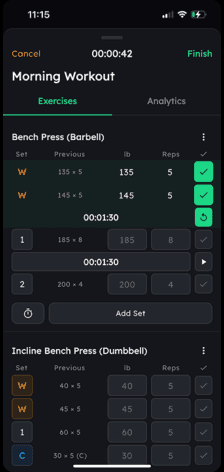
Adjust your saved routine for the cut. Log fewer sets, keep the weight heavy, and take four minutes on the rest timer.
No commitment · Cancel anytime
Frequently Asked Questions
How much strength loss is normal when cutting?
A mild drop in top-end strength is standard, especially on pressing movements. Losing five to ten percent off your maximum bench press or overhead press over a twelve-week diet is common and mostly reflects changes in joint leverage and water retention. Lower body movements like squats and deadlifts tend to hold their strength longer. Bodyweight movements often improve.
Does losing strength mean I am losing muscle mass?
Usually, no. The initial drop in strength during a diet is almost entirely due to glycogen depletion, reduced fluid pressure inside the muscle, and a loss of mechanical leverage from shrinking fat pads around the joints. True muscle tissue loss takes longer and usually only happens if protein intake is very low or the calorie deficit is extreme.
Can I maintain my strength while in a calorie deficit?
Yes, especially if you have a higher starting body fat percentage or a newer training age. The body can pull energy from abundant fat stores to fuel performance. For leaner lifters with years of experience, maintaining peak numbers is much harder. The goal shifts from building new strength to minimizing the temporary loss of output.
What supplements can help prevent strength loss?
Creatine monohydrate is the most reliable option. It helps replenish cellular energy systems during short bursts of heavy lifting, which is highly beneficial when dietary carbohydrates are low (Kerksick et al., Journal of the International Society of Sports Nutrition 2018). Adequate sodium and electrolyte intake also plays a massive role in maintaining fluid balance and nerve signaling, keeping your muscles firing properly during the workout.
Do sleep patterns impact strength retention during a cut?
Sleep quality dictates recovery. A calorie deficit already limits your body's ability to repair tissue. Shortchanging your sleep compounds that recovery deficit heavily. Poor sleep reduces insulin sensitivity, lowers testosterone, and spikes cortisol, all of which make it significantly harder to hold onto muscle mass and maintain strength output while eating less food.
Conclusion
A calorie deficit is a temporary state of low energy. Recognizing it as such allows you to adjust your expectations and your training without panicking over the daily fluctuations in the logbook.
The weight on the bar feeling heavier is a mechanical reality of carrying less body fat and less stored carbohydrate. It is not an immediate failure of your muscle tissue. When you stop chasing the volume you used during a surplus and start prioritizing heavy tension, you give your body exactly the stimulus it needs to retain what you built.
You can protect your hard-earned progress by resting longer between sets, keeping your protein high, and clustering your carbs around your workout. The strength you feel like you are losing is mostly just waiting for the diet to end. Once the food comes back, the leverage and the glycogen return with it.
All content and media on Mofilo is created and published for informational purposes only. It is not intended to be a substitute for professional medical advice, diagnosis, or treatment. Always seek the advice of your physician or other qualified health provider with any questions you may have regarding a medical condition, including but not limited to eating disorders, nutritional deficiencies, injuries, or any other health concerns. If you think you may have a medical emergency or are experiencing symptoms of any health condition, call your doctor or emergency services immediately.
Read more blogs
How to Handle Social Pressure When You Start Eating Healthy
What You'll Learn in 10 Min
- •Why your new diet makes old friends act defensive
- •Which 2 simple responses stop direct food pushback
- •How occasional compromise beats rigid macro tracking
A Structured Ramp-Up Protocol When You Have No Motivation to Workout After Vacation
What You'll Learn in 9 Min
- •Why lost drive is a metabolic shift, not willpower
- •How to drop total sets to prevent crippling soreness
- •Which low-intensity moves restore your nervous system
How to Maintain Muscle During a Two-Week Vacation From the Gym
What You'll Learn in 12 Min
- •Why early vacation size loss is just water and carbs
- •How restricting calories on a break speeds muscle loss
- •Which protein timing mistake costs you lean mass daily