The Body Recomposition Timeline: Month-by-Month Expectations
By Mofilo Team
Published 11 min read
Key Takeaways
- Building muscle while losing fat requires matching a moderate calorie deficit with progressive training. The deficit handles the fat loss while mechanical tension prompts the body to retain or build tissue.
- Beginners and returning lifters see changes in a few months, while advanced lifters measure progress in quarters. Align your expectations with your actual training age instead of a generic timeline.
- Strength increases in the first four weeks come mostly from the nervous system learning to fire, not new muscle mass. Real tissue growth takes at least eight weeks to show up on a scan or in the mirror.
- Set your calorie deficit small enough that your lifts can still go up. Deep cuts strip away the energy your body needs to synthesize new muscle proteins.
You hit week eight of eating high protein and lifting heavy, and the scale has barely moved. Your clothes fit slightly differently, but the mirror looks largely the same. The temptation to drop calories aggressively and just run a standard cut is high.
Body recomposition is the most sought-after goal in fitness, but it is also the slowest to manifest visually. When you try to build muscle and lose fat at the same time, the scale stops being a reliable proxy for progress. Muscle is dense and heavy.
Fat takes up more volume per pound. If you lose two pounds of fat and gain a pound of muscle, the scale barely registers the change, but your body composition is fundamentally different.
Most people quit their recomposition phase right before the adaptations actually become visible. They interpret the slow scale movement as failure. The timeline for building tissue and dropping fat simultaneously is dictated by your biology and training history, as well as how much stored energy you carry.
Understanding the timeline prevents you from abandoning the process prematurely. Knowing exactly what happens in month one versus month three stops the panic. Here is how the timeline actually unfolds.
Why You Get Stronger Before You Get Bigger
The first four weeks of a recomposition phase often feel incredibly productive in the gym. Your bench press goes up. Your squats feel more stable. You are adding weight to the bar almost every session.
Many lifters mistake this rapid strength increase for immediate muscle growth. The reality is that your nervous system is simply learning how to coordinate the movement. Early strength gains come from neural adaptations rather than actual increases in muscle fiber size (Roberts et al., Physiological Reviews 2023). Your brain gets better at recruiting the muscle you already have.
Motor units learn to fire in unison. Stabilizer muscles figure out how to support the primary movers.
During this first month, visible changes in the mirror will be minimal. The scale might even fluctuate upward slightly. This happens because new training stress causes localized muscle inflammation and water retention.
When you subject your body to novel mechanical stress, muscle fibers sustain micro-tears. The repair process requires fluid. Simultaneously, your muscles begin storing more glycogen to fuel the new activity. Every gram of stored carbohydrate pulls roughly three grams of water into the muscle cell with it.
This phase acts as a filtering mechanism for lifters. People who expect dramatic visual changes in four weeks usually quit here. They see the scale bump up, panic, and drop their calories.
The goal in month one is simply to establish a baseline of strength and lock in your protein intake. You are laying the neurological groundwork for the tissue growth that comes later.
The Measurement Threshold
By week eight, the nervous system has mostly adapted to the novel movements. Now, the burden of lifting heavier weights shifts to the muscle tissue itself. This is when structural changes actually begin to take hold.
It takes a minimum of eight to twelve weeks of consistent training to detect significant changes in muscle cross-sectional area or fat-free mass on a DEXA scan (Brook et al., European Journal of Sport Science 2015). Before this point, the tissue is growing, but the amounts are too small to reliably measure against the noise of daily water weight and glycogen storage.
This is the exact window where doubt peaks. You have been working hard for two months, but the visual feedback remains subtle.
You might actually feel slightly softer during this phase. As the fat cells begin to empty out, they temporarily fill with water, leading to a squishy feeling that lifters often mistake for gaining fat. The fat layer over the muscle is thinning while the muscle belly underneath is expanding.
You might notice your shirts fitting tighter across the shoulders while your waistband feels slightly looser. These opposing measurements are the true hallmark of body recomposition.
If you switch to a steep calorie deficit now because the scale has not dropped, you interrupt the process. You cut off the energy supply right at the exact moment muscle protein synthesis is beginning to yield measurable tissue.
Patience here is operational, not just philosophical. The biology simply requires a quarter of a year to manifest changes you can see in a photograph.

Proof that your effort is actually working.
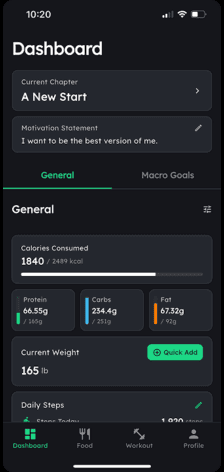
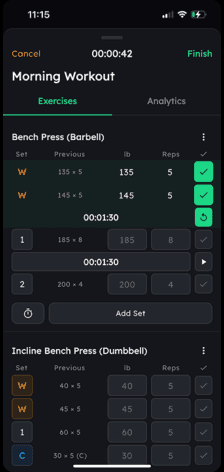
The scale is flat and you want to drop calories. Check your strength charts and tape measurements in Mofilo instead.
No commitment · Cancel anytime
How Experience and Body Fat Change Your Timeline
The timeline above assumes you are relatively new to structured lifting. Training age is the single biggest variable in how fast a recomposition happens.
Untrained individuals initiate muscle growth and fat loss at a highly accelerated rate compared to experienced lifters (Morton et al., British Journal of Sports Medicine 2017). A true beginner can build noticeable muscle and drop body fat simultaneously within their first three to four months. Their bodies are highly sensitive to the new stimulus of resistance training.
Once you have three years of intelligent lifting behind you, that window closes. Advanced lifters rarely achieve meaningful recomposition unless they are returning from a long layoff or recovering from an injury.
Your starting body fat percentage also dictates the duration of the recomposition window. Higher baseline adiposity allows for a greater magnitude of concurrent fat loss and muscle retention even in a deficit (Roth et al., European Journal of Applied Physiology 2022). Stored body fat provides an abundant energy reserve.
If you carry a significant amount of excess body fat, you can successfully run a recomposition phase for six months or longer. The body easily pulls from fat stores to fund the expensive process of building muscle.
As you get leaner, the body becomes protective of its remaining fat. A lean individual attempting to recomp will eventually stall, finding themselves just spinning their wheels without gaining muscle or losing fat. At that point, distinct bulking and cutting phases become necessary.
Why Large Deficits Stop Muscle Growth
A common error is applying standard weight-loss math to a recomposition goal. Dropping your calories by a thousand a day will certainly cause weight loss. It will also shut down your ability to build new tissue.
Muscle growth is an energy-intensive process. A massive energy deficit directly impairs muscle protein synthesis and limits hypertrophy, regardless of how hard you train (Vázquez-Lorente et al., The Journal of Nutrition, Health & Aging 2025). Your body prioritizes essential organ functions and daily movement over building new biceps when it perceives a severe food shortage.
Successful recomposition requires a slight deficit. A reduction of 200 to 300 calories below your daily maintenance needs is usually enough to coax fat loss without starving the muscle-building process.
This small deficit is another reason the timeline feels slow. You are losing fat at a rate of roughly half a pound per week.
When you only lose two pounds a month, daily scale fluctuations easily mask your progress. A salty meal or a hard leg day can bump your water weight up by three pounds, completely hiding a month of actual fat loss.
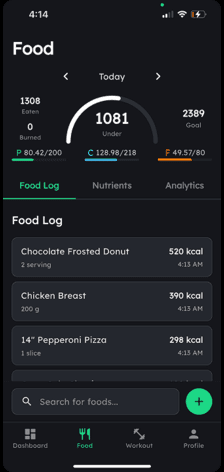
Precision in your nutrition matters immensely here. When your deficit is only 250 calories, an unmeasured handful of almonds or a heavy pour of olive oil erases it entirely. You end up eating at maintenance, which maintains your current physique.
How to Track Progress When the Scale Stalls
If the scale is useless for tracking recomposition, you need better metrics. Visual changes take months, so you need data points that move weekly to confirm you are on the right path.
Gym performance is your primary indicator. If your body weight is stable but your lifts are consistently going up across the eight-to-twelve rep range, you are almost certainly building muscle.
Strength increases after the initial first-month neural phase require actual structural adaptations.
Tape measurements offer a secondary layer of proof. Measure your waist at the navel, along with your hips and shoulders, every two weeks. If your waist measurement shrinks while your shoulder circumference stays the same or grows, recomposition is happening.
Pay attention to how your clothes drape. A shirt that gets tighter in the chest but looser around the midsection is objective evidence of tissue change. The scale cannot differentiate between bone, water, fat, and muscle, but the fit of a rigid waistband never lies.
Progress photos tell the final part of the story, provided you standardize them. Take them once a month in the same lighting and at the same time of day. Day-to-day visual checks in the bathroom mirror will only drive you crazy.
Run your recomp without second-guessing.
Give your phase a defined chapter. Track the exact waist measurements and lift numbers that prove the work is paying off.
No commitment · Cancel anytime
Why Training Effort Drives the Whole Process
You cannot just eat high protein in a small deficit and expect your body to recomposition on its own. The nutrition only permits the change. The training is what forces it.
During a calorie deficit, muscle protein synthesis naturally drops, but adequate mechanical tension and progressive overload restore that synthetic response (Murphy et al., American Journal of Physiology-Endocrinology and Metabolism 2015). Without a strong training stimulus, the body has no reason to maintain expensive muscle tissue when food is scarce.
This means your workouts need to be challenging. Moving light weights for high reps to burn calories is an anti-pattern for recomposition. You need to lift heavy enough, and close enough to failure, to signal a need for adaptation.
Proximity to failure is the variable most lifters get wrong. If you finish a set of squats and could have easily done five more reps, you did not create enough mechanical tension to trigger growth.
You need to finish sets knowing you only had one or two good repetitions left in the tank.
If your progress has stalled at month three, audit your training intensity before you change your diet. Often, lifters simply stop pushing for progressive overload once the initial neural adaptations level off, leaving their physique exactly where it started.
Frequently Asked Questions
Does body recomposition work for everyone?
Recomposition works best for specific populations. Beginners and people returning from a long break from lifting will see the most dramatic results, alongside those with higher body fat percentages. Advanced lifters with low body fat usually find it much harder to build muscle and lose fat at the same time, often requiring dedicated bulking and cutting phases instead.
Can I do body recomposition without counting calories?
It is possible, but it requires strict attention to portion sizes and protein intake. Because the calorie deficit needed for recomposition is small, it is very easy to accidentally eat at maintenance if you are not tracking. Tracking provides certainty, but if you prefer not to log food, focusing on lean protein at every meal and limiting processed carbohydrates can sometimes create the necessary deficit naturally.
How much muscle can I gain during body recomposition?
The rate of muscle growth depends entirely on your training experience. A true beginner might build a few pounds of muscle over several months while dropping fat. An intermediate lifter might only build a fraction of a pound in that same timeframe. The visual impact of gaining even two pounds of muscle while losing three pounds of fat is significant, even if the total weight sounds small.
What if I am not seeing results after three months?
If your lifts have stalled and your measurements have not changed after twelve weeks, one of two things is happening. Either your training lacks the intensity required to force muscle growth, or your nutrition is off. Most of the time, lifters are either eating too many calories to lose fat or not training close enough to failure to build tissue.
Is body recomposition harder for women than men?
The biological mechanisms for building muscle and losing fat are the same for both sexes. Women typically have less absolute muscle mass and different hormonal profiles, which can make the absolute rate of change slower. However, the relative changes in body composition follow the exact same timeline and require the exact same combination of a slight deficit and progressive training.
Conclusion
Body recomposition is a slow, quiet process that happens beneath the surface before it ever registers in the mirror. The timeline requires patience that most lifters simply do not practice.
When you stop expecting visual overhauls in four weeks, the process becomes much easier to manage. You stop panic-dieting when the scale fluctuates. You focus on adding weight to the bar instead of obsessing over daily visual checks.
Your body adapts to what you consistently give it over months, not days. The tissue will change if you combine a slight deficit with enough protein and challenging training. You just have to stay out of your own way long enough to let the biology do the work.
All content and media on Mofilo is created and published for informational purposes only. It is not intended to be a substitute for professional medical advice, diagnosis, or treatment. Always seek the advice of your physician or other qualified health provider with any questions you may have regarding a medical condition, including but not limited to eating disorders, nutritional deficiencies, injuries, or any other health concerns. If you think you may have a medical emergency or are experiencing symptoms of any health condition, call your doctor or emergency services immediately.
Read more blogs
How to Handle Social Pressure When You Start Eating Healthy
What You'll Learn in 10 Min
- •Why your new diet makes old friends act defensive
- •Which 2 simple responses stop direct food pushback
- •How occasional compromise beats rigid macro tracking
A Structured Ramp-Up Protocol When You Have No Motivation to Workout After Vacation
What You'll Learn in 9 Min
- •Why lost drive is a metabolic shift, not willpower
- •How to drop total sets to prevent crippling soreness
- •Which low-intensity moves restore your nervous system
How to Maintain Muscle During a Two-Week Vacation From the Gym
What You'll Learn in 12 Min
- •Why early vacation size loss is just water and carbs
- •How restricting calories on a break speeds muscle loss
- •Which protein timing mistake costs you lean mass daily