How to Keep Your Muscle on a Two-Week Vacation
By Mofilo Team
Published 11 min read
Key Takeaways
- Muscle tissue does not disappear in fourteen days. The deflation you see in the mirror is mostly water and stored carbohydrate leaving the muscle belly.
- Dropping your calories to offset missed workouts is the most common vacation mistake. Eating at maintenance or a slight surplus protects your tissue better than starving.
- Daily walking defends against muscle loss better than a random hotel room workout. Abrupt drops in overall daily movement trigger tissue breakdown faster than skipping heavy squats.
- Keeping your protein intake high is the single most effective dietary tool for muscle maintenance. Spread your intake across the day instead of saving it all for dinner.
You step into the hotel bathroom on day three of your trip and look in the mirror. You look flat. The muscle density you spent the last eight months building seems to have evaporated. You start doing the math on how much progress you are about to lose over the next eleven days.
This is the vacation anxiety loop. It ruins holidays and drives people to do high-intensity interval training in a carpeted hotel room at six in the morning.
The fear is real, but the biological math is wrong.
Fourteen days away from a barbell will not erase your physique. The human body is remarkably efficient at holding onto tissue it has already built. It only drops expensive muscle mass if you actively give it a reason to tear that tissue down. Most people accidentally trigger muscle loss on vacation not by skipping the gym, but by mismanaging their food and recovery out of sheer panic.
Muscle maintenance away from home is not about replicating your normal training volume. It is about understanding what signals your body actually needs to preserve tissue. Once you know the mechanism, you can stop stressing over missed workouts. You can eat the local food, enjoy the rest, and return to your routine without missing a step.
How Fast Do You Actually Lose Muscle?
Actual structural muscle loss takes much longer than the fitness industry leads you to believe. The tissue itself is highly resilient. Studies measuring cross-sectional area show that visible degradation of actual muscle fiber takes several weeks to begin occurring in trained individuals (McMahon et al., Frontiers in Physiology 2019).
You are not losing muscle in the first week. You are losing glycogen.
Glycogen is how your muscles store carbohydrates for energy. Every gram of glycogen holds roughly three grams of water. When you stop training heavily, your body stops storing as much glycogen in the muscle belly.
The water leaves with it. Your muscles literally deflate.
This is a fluid shift, not a tissue loss. When you return to the gym and eat normally, the glycogen and water return within a few days. The architecture of the muscle remains entirely unchanged during this brief period of reduced volume.
Even if a two-week break stretches into three weeks and minor tissue loss occurs, it comes back fast. This happens through the myonuclear domain mechanism, often called muscle memory, which allows previously trained muscle to rebuild at an accelerated rate once loading resumes (Snijders et al., Acta Physiologica 2020).
You already own the foundation. A brief pause in construction does not tear down the house.
The Calorie Deficit Trap on Vacation
The most common mistake lifters make on vacation is dropping their calories.
The logic feels sound to someone used to tracking macros. You are not lifting, so you assume you need less food to avoid gaining body fat. You start skipping breakfast or eating tiny salads while walking five miles a day around a new city.
This is how you actively tell your body to drop muscle mass.
Muscle tissue is metabolically expensive to keep alive. If your body is in an energy deficit while you are detraining, it will use that deficit as a reason to break down muscle tissue to meet its immediate energy needs (Gwin et al., Nutrients 2020).
Eating at maintenance is your best defense against atrophy.
When your body has enough incoming energy, it has no reason to scavenge amino acids from your biceps or quads. If you are going to take two weeks off from training, you need to eat enough food to signal that the environment is safe. Starving yourself while detraining accelerates the exact outcome you are trying to avoid.
A slight surplus is actually safer for muscle maintenance than a deficit. Enjoy the local food and stop worrying about a few extra calories.

Stop skipping meals to save your progress.
You see a flat mirror and drop your calories. Name this a maintenance chapter and hold what you built.
No commitment · Cancel anytime
What Happens When Your Step Count Plummets
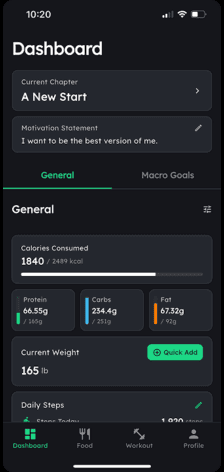
Sometimes a vacation means lying on a beach for ten days. Your step count drops from ten thousand to a few hundred.
This sudden lack of general movement is a bigger threat to your muscle mass than skipping your scheduled workouts. Abrupt physical inactivity directly blunts the rate at which your body synthesizes new muscle proteins (Marshall et al., Nutrients 2020).
Your body interprets zero activity as a signal that muscle is no longer required.
You do not need to find a gym to counter this effect. You just need to keep moving. Daily walking is the most accessible tool you have. Walking to dinner, taking a morning stroll on the beach, or exploring a city on foot provides enough low-level mechanical tension to keep the metabolic machinery running.
The goal is not to exhaust yourself with cardio. The goal is simply to avoid total physical stagnation.
If your vacation is highly active, like hiking in the mountains or walking across a European capital, you are already providing a massive maintenance signal to your legs and core. You can cross movement off your worry list entirely.
Why Protein and Sleep Matter More Than Push-Ups
When people worry about muscle loss away from home, they usually try to fix it with exercise. They do endless bodyweight squats in their hotel room.
Nutrition and recovery actually do more of the heavy lifting for maintenance.
Keeping your protein intake high provides a strong protective effect against muscle loss, even when your daily step count and training volume drop significantly (Dirks et al., Journal of applied physiology 2018). Protein supplies the amino acids your body needs to maintain its baseline repair processes.
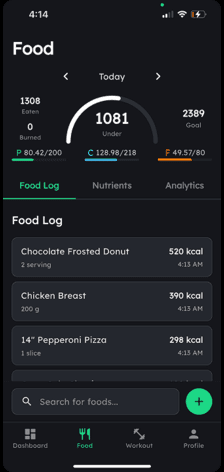
Aim for a solid serving of protein at every meal. You do not need to track grams meticulously on holiday. Just prioritize a primary protein source on your plate before filling up on side dishes.
Sleep is the other half of the retention equation.
Vacations often mean late nights, jet lag, and early morning excursions. Chronic sleep restriction accelerates the loss of lean mass and negatively alters your ratio of cortisol to testosterone (Saner et al., Journal of Physiology 2020).
A tired body in an unfamiliar environment is a stressed body. Getting adequate rest protects your physique just as much as a high-protein breakfast. Treat sleep as a core component of your maintenance strategy.
Keep the body you earned on vacation.
A protein target that guards your work, and a written reason to remind you it is okay to rest.
No commitment · Cancel anytime
The Alcohol Factor in Muscle Recovery
Margaritas by the pool and wine at dinner are standard parts of many holidays.
Alcohol does interact with your physiology. Heavy drinking directly suppresses the signaling pathways responsible for muscle protein synthesis (Reed et al., Alcohol 2022).
This does not mean you must stay sober to keep your gains. It means you need to manage the dose.
A glass of wine with dinner will not instantly dismantle your biceps. Binge drinking for five consecutive days will create an environment where your body struggles to repair and maintain tissue. Alcohol is a toxin. Your liver will always prioritize clearing it over facilitating muscle maintenance.
The practical approach is moderation and hydration.
If you plan to drink, make sure you are also eating enough protein and drinking plenty of water. Keep the heavier nights to a minimum. You can enjoy your vacation without turning it into a metabolic stress test for your body.
Age and the Detraining Timeline
The timeline for muscle loss is not identical for everyone. Your age plays a significant role in how your body handles a break from the gym.
Younger lifters can often coast for weeks with minimal changes to their actual tissue structure. Older adults experience detraining-induced atrophy at a faster rate due to changes in how their bodies manage protein breakdown and repair (Fuqua et al., Journal of Cachexia, Sarcopenia and Muscle 2023).
This simply means the maintenance rules become tighter as you age.
If you are over fifty, a two-week vacation with zero movement and low protein will have a more pronounced effect than it would on a twenty-five-year-old. You do not need to panic, but you do need to be intentional.
Prioritize daily walking. Make sure your protein intake remains steady. If you have access to a hotel gym, a single thirty-minute session of moderate resistance training in the middle of your trip provides an excellent stimulus to offset age-related anabolic resistance.
You are still capable of maintaining your mass. You just have less margin for error.
The Psychology of the First Workout Back
The hardest part of a two-week vacation is usually the first workout when you return.
You unrack the bar and it feels substantially heavier than it did fourteen days ago. Your coordination feels slightly off. You might assume this heavy sensation is proof that you lost muscle mass.
It is actually just a temporary loss of neurological efficiency.
Strength is a physical adaptation, but lifting heavy weights is also a skill. Your nervous system needs practice to fire motor units in perfect synchronization. When you take time off, that neurological coordination gets slightly rusty. The muscle tissue is still there, but the brain-to-muscle connection is briefly out of practice.
Do not max out on your first day back. Treat the first week as a re-acclimation period.
Drop the weights by ten to fifteen percent. Focus on smooth repetitions and feeling the movement pattern. By the second week, your neurological efficiency will return, and the weights will feel normal again.
Frequently Asked Questions
How quickly do I lose muscle mass without working out?
Most people will not lose actual muscle tissue within the first two weeks of a gym break. The initial loss of size you notice is almost entirely a reduction in muscle glycogen and water. Your muscles look smaller because they are storing less fluid, not because the structural protein is gone. True tissue loss usually takes several weeks of complete inactivity to register.
What is the minimum activity needed to prevent muscle loss?
You do not need a structured workout to maintain muscle over a short period. General daily movement, like walking a few miles while sightseeing, provides enough baseline tension for most people. If you want extra insurance, a brief session of push-ups and lunges once or twice a week is more than enough to signal your body to keep the tissue.
Should I eat more or less on vacation to maintain muscle?
Eating at your maintenance calories is typically the best strategy. Dropping your food intake significantly because you are not lifting often backfires. A severe calorie deficit combined with a lack of training creates a strong signal for your body to break down muscle for energy. Eating enough food protects your lean mass.
Will a two-week break significantly impact my strength gains?
Your maximal strength might feel slightly uncoordinated during your first session back, but your true baseline strength remains intact. Strength is a skill as much as it is a physical adaptation. You might need one or two workouts to remember how to brace and move heavy loads efficiently, but the underlying power does not disappear in fourteen days.
What kind of protein intake is best for muscle maintenance?
Spreading your protein intake evenly across the day is highly effective for maintenance. You do not need to track exact macros on vacation. Simply aiming for a solid portion of protein at breakfast, lunch, and dinner ensures your body has a steady supply of amino acids to handle routine tissue repair.
Conclusion
Taking time away from the gym is a normal part of a sustainable life. The anxiety of losing your progress often does more damage to your mindset than a two-week break does to your body. Your physique is anchored by what you do most of the year, not what you skip over a fortnight in the sun.
If you keep your daily movement reasonable, eat enough food to fuel your days, and prioritize a solid serving of protein, your muscle tissue is safe. The deflation you see in the hotel mirror is just water leaving the muscle belly.
It returns the moment you resume your normal routine. Enjoy your meals, prioritize your rest, and let your body recover. You will return to your regular training fully recovered and ready to pick up exactly where you left off.
All content and media on Mofilo is created and published for informational purposes only. It is not intended to be a substitute for professional medical advice, diagnosis, or treatment. Always seek the advice of your physician or other qualified health provider with any questions you may have regarding a medical condition, including but not limited to eating disorders, nutritional deficiencies, injuries, or any other health concerns. If you think you may have a medical emergency or are experiencing symptoms of any health condition, call your doctor or emergency services immediately.
Read more blogs
How to Handle Social Pressure When You Start Eating Healthy
What You'll Learn in 10 Min
- •Why your new diet makes old friends act defensive
- •Which 2 simple responses stop direct food pushback
- •How occasional compromise beats rigid macro tracking
A Structured Ramp-Up Protocol When You Have No Motivation to Workout After Vacation
What You'll Learn in 9 Min
- •Why lost drive is a metabolic shift, not willpower
- •How to drop total sets to prevent crippling soreness
- •Which low-intensity moves restore your nervous system
How to Maintain Muscle During a Two-Week Vacation From the Gym
What You'll Learn in 12 Min
- •Why early vacation size loss is just water and carbs
- •How restricting calories on a break speeds muscle loss
- •Which protein timing mistake costs you lean mass daily