Why Calorie Deficit Hunger Spikes in Weeks 2 to 3 (And How to Fix It)
By Mofilo Team
Published 12 min read
Key Takeaways
- Hunger peaks during the second and third weeks of a diet because your body finally recognizes the energy shortfall. It responds by actively upregulating appetite to force you back to maintenance calories.
- A massive initial drop in food intake triggers a much harsher hormonal pushback than a moderate one. Shrinking your deficit often leads to better fat loss simply because you can actually stick to it.
- Hitting a daily protein target is not enough to keep you full if you eat most of it at dinner. Spreading protein evenly across meals delays digestion and keeps satiety hormones active throughout the day.
- Poor sleep makes dieting artificially difficult by changing how your brain processes the need for food. Adding an hour of sleep often does more for appetite control than changing what you eat.
The first week of a cut usually feels fine. You drop calories, prep meals, and ride the initial wave of novelty. By day fourteen, the novelty wears off. By day twenty-one, you are staring at a bowl of vegetables wondering if you have the discipline to finish the month.
Calorie deficit hunger is the reason most fat loss phases fail. People assume they lack willpower when they start wanting food constantly around the third week. They watch others seemingly diet with ease and internalize the struggle as a personal defect.
It is not a defect. It is a predictable biological sequence. The discomfort you feel at this stage is the exact reason diet attrition rates are so heavily tied to unmanaged appetite (Pavlidou et al., Metabolites 2023). You are fighting a physical adaptation, not a moral failing.
Most day-to-day appetite management comes down to a few core levers. You cannot eliminate the desire for food entirely when you are underfeeding yourself. You can structure your approach so the hunger stays manageable rather than overwhelming.
Why the Third Week Feels So Difficult
A calorie deficit is essentially a controlled energy shortage. During the first few days, your body leans on stored glycogen and transient water weight. The hormonal environment remains relatively stable.
That stability does not last. As you enter the second and third weeks, the biological reality of the energy shortage registers. Your metabolism begins a coordinated defense mechanism. Self-reported hunger and the physical sensation of emptiness reliably escalate during this specific window of a weight loss intervention (Greenway, International Journal of Obesity 2015).
This is when the illusion of an easy diet shatters.
The problem is twofold. As you lose mass and reduce intake, your daily energy expenditure naturally decreases. At the exact same time, your body aggressively upregulates the drive to eat (MacLean et al., Obesity 2014). You are burning slightly less, but wanting food significantly more.
Many people misinterpret this spike in appetite as a sign their diet is broken. They assume they need to change their macronutrient ratios or switch to a completely different eating framework.
Usually, the diet is working exactly as intended. The hunger is proof the deficit exists. The goal is not to negotiate this biological response down to zero. The goal is to keep it at a low hum rather than a deafening alarm.
Understanding this timeline is the first step in managing it. If you know week three will be difficult, you stop relying on the motivation that carried you through week one. You start relying on structure.
That structure begins with the size of the deficit itself. Most people start too aggressively, pulling calories drastically low to speed up the timeline. They trade short-term speed for a long-term wall.
The Counter-Regulatory Trap
The instinct to cut calories as low as possible is entirely logical. If a small deficit burns some fat, a massive deficit should burn more fat in less time.
Biology rarely rewards simple arithmetic. The size of the gap between what you burn and what you eat dictates the severity of your body's pushback.
When you force a massive energy restriction, you trigger a disproportionate hormonal response. The relationship between how deep you cut calories and how aggressively your body ramps up appetite hormones is direct and measurable (Lean and Malkova, International Journal of Obesity 2015).
A 1000-calorie deficit does not just make you twice as hungry as a 500-calorie deficit. It often makes you ravenous.
This is the counter-regulatory trap. You restrict heavily to lose weight faster. The severe restriction spikes your appetite hormones to intolerable levels. You eventually break the diet, overeat to compensate, and end up exactly where you started.
The middle ground is where sustained fat loss actually happens. A moderate deficit of 300 to 500 calories per day still triggers some hunger, but it rarely triggers a binge.
If you are struggling to function by week three, your deficit is likely too large.
Shrinking the gap feels counterintuitive when you want quick results. Adding 200 calories back into your daily target often reduces the psychological friction of the diet enough to let you stay consistent for months. Consistency at a smaller deficit always beats a massive deficit you abandon on day twenty-two.
Adjusting the total calories is the broad stroke. The next step is adjusting how those calories are composed, starting with the most satiating macronutrient available.

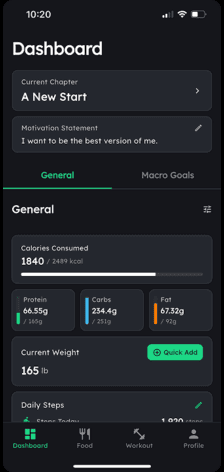
Keep control of the choice.
Week three makes you doubt your discipline. The reason you started shows up before every meal so the final choice stays yours.
No commitment · Cancel anytime
Why Protein Timing Matters More Than Total Intake
Most people know protein is important for retaining muscle while leaning out. Fewer understand its mechanical role in keeping you full.
Protein takes significant time and energy to break down in the digestive tract. The presence of protein in the gut directly stimulates the release of primary satiety hormones like GLP-1, PYY, and CCK (Dorling et al., Nutrients 2018). These hormones signal your brain that food has been secured, lowering the immediate drive to eat.
Total daily protein matters, but distribution dictates your hour-to-hour comfort.
A common pattern is a low-protein breakfast, a moderate lunch, and a massive dinner to hit the day's macro target. This leaves the body practically un-signaled for the first ten hours of the day.
You spend your working hours fighting hunger, only to feel overly stuffed right before bed.
Spreading that intake changes the daily experience. Hitting an optimal dose of protein per meal delays gastric emptying and maximizes the subjective feeling of fullness between meals (Jaïs and Brüning, Endocrine Reviews 2021). For most adults, this means aiming for 25 to 40 grams of protein every time they sit down to eat.
You do not need to eat six times a day. Three or four well-constructed meals work perfectly.
The goal is simply to ensure each meal contains enough protein to trigger that hormonal cascade. A bowl of oatmeal in the morning processes quickly. Stirring in protein powder or eating eggs on the side slows that digestion down, carrying you to lunch without a mid-morning crash.
When you manage protein distribution, you manage the physical mechanics of hunger. Hunger is not always physical, though. Sometimes it is a symptom of poor recovery.
How Poor Sleep Manufactures Fake Hunger
You can perfectly calibrate your deficit and evenly distribute your protein, but a bad night of sleep can ruin the entire setup.
Fatigue disguises itself as hunger. When you are under-recovered, your brain seeks immediate energy to compensate for the lack of rest.
This is not a lack of willpower. Partial sleep deprivation directly alters your homeostatic appetite hormones, driving up hunger even when you have eaten enough food (Markwald et al., Proceedings of the National Academy of Sciences 2013). Your ghrelin levels rise, signaling hunger, while leptin levels fall, muting your sense of fullness.
The result is a day where no amount of food feels satisfying.
Sleep-deprived hunger is also highly specific. You rarely crave plain chicken breast or broccoli when you are tired. You crave hyper-palatable, calorie-dense foods. Your brain wants fast-acting carbohydrates and fats to bridge the energy gap.
Many people blame their diet for this intense craving when they should be blaming their sleep schedule.
Fixing this requires treating sleep as a primary nutritional lever. If you are consistently sleeping less than six hours a night, trying to maintain a calorie deficit will feel like walking uphill in sand.
Prioritizing seven to eight hours of quality rest stabilizes those appetite hormones. It removes the artificial hunger manufactured by exhaustion.
If you find yourself inexplicably ravenous despite hitting all your food targets, look at your sleep data first. Adding an hour of sleep is often the most effective diet adjustment you can make. It costs zero calories and requires zero food prep.
The Role of Food Volume in Physical Fullness
Beyond hormones and sleep, your stomach relies on physical stretch receptors to gauge how much you have eaten. A small volume of calorie-dense food leaves these receptors untouched.
This is why two tablespoons of peanut butter feel like nothing, while an entire bag of spinach feels like a heavy meal, even though the peanut butter contains far more calories. The physical weight and space the food occupies in your gut matters.
When you enter a calorie deficit, your total food volume naturally drops unless you actively change your food choices.
If you simply eat smaller portions of your usual diet, your stomach will physically feel empty. The stretch receptors will not activate. Your brain will register this emptiness as a need to seek more food.
Solving this requires swapping high-density foods for high-volume, low-calorie alternatives. This does not mean you have to eat salads for every meal. It means padding your existing meals with foods that take up space.
Adding a cup of roasted zucchini to a pasta dish doubles the physical size of the meal for less than thirty calories. Swapping half your regular rice portion for riced cauliflower keeps the bowl looking full while dropping the energy load significantly.
These volume strategies trick the stretch receptors. You get the physical sensation of having eaten a large meal without the caloric penalty.
Water content plays a similar role. Foods naturally high in water, like melons, berries, and soups, provide immediate physical weight in the stomach. Pairing a large glass of water with a high-fiber meal amplifies this effect, as the fiber absorbs the water and expands during digestion.
Volume eating is a tactical defense against the week three hunger spike. It keeps the physical machinery of your digestive tract busy.
Plan a Diet Break
Even with perfect execution, staying in a deficit for months is grueling. The longer you restrict, the louder the hunger signals become.
This is where strategic pauses become useful. A diet break is a planned period, usually one to two weeks, where you raise calories back to maintenance levels.
It is not a cheat week. You still track your intake and prioritize whole foods. You simply eat enough to stop losing weight temporarily.
Taking a break from continuous restriction provides significant psychological relief and alters appetite hormones to reduce subjective hunger (Hoddy et al., Obesity 2020). The extra food signals your body that the energy shortage is over, allowing the hormonal environment to stabilize.
Many lifters fear diet breaks because they think it will halt their progress.
Taking a planned pause often accelerates long-term results. The brief return to maintenance calories dissipates the accumulated fatigue and hunger. When you drop back into a deficit two weeks later, you feel refreshed.
The week three hunger spike is often the first indicator that a future diet break will be necessary. If you push through the initial spike, you might make it to week eight or ten before the fatigue becomes unmanageable.
At that point, raising calories to maintenance is the smartest move you can make.
Fat loss is not a sprint to the finish line. It is a phased process of pushing and recovering. Structuring your cut with intentional periods of maintenance ensures you actually reach your goal instead of burning out halfway there.
Pause the cut without quitting.
Run the deficit until hunger peaks. Then start a maintenance chapter to recover your energy while your tracking history carries forward.
No commitment · Cancel anytime
Frequently Asked Questions
Does hunger ever go away completely during a cut?
Hunger rarely disappears entirely when you are in a calorie deficit. Your body is designed to recognize and respond to an energy shortage. The goal is not zero hunger, but manageable hunger. If you structure your meals well, the intense cravings usually subside, leaving a mild physical emptiness that is easy to ignore while you work or train.
What if I am still hungry after eating enough protein?
If your protein is set correctly and spread across the day, the next lever to check is fiber and food volume. A high-protein meal that is physically very small will not trigger the stretch receptors in your stomach. Adding high-water, high-fiber vegetables to your protein source fixes this issue for most people.
Is intermittent fasting better for managing appetite?
Fasting works well for some people by condensing their daily calories into a shorter window, which allows for larger, more satisfying meals. For others, skipping breakfast creates unmanageable hunger by mid-afternoon, leading to overeating at dinner. It is a scheduling tool, not a physiological requirement for fat loss.
Can poor sleep really make a diet that much harder?
Yes. Lack of sleep directly increases ghrelin, the hormone that makes you hungry, and decreases leptin, the hormone that tells you to stop eating. Most people find that their hardest diet days always follow their worst nights of sleep. Prioritizing rest is a direct strategy for appetite control.
Should I ignore my stomach growling if it isn't mealtime?
Stomach growling is normal digestion and physical movement in the gut, not an emergency signal that you must eat immediately. Drinking a glass of water or having a black coffee can often settle the physical sensation until your next planned meal. If the growling is paired with lightheadedness or severe fatigue, your overall calorie target might be too low.
Conclusion
Feeling hungry while losing fat is a normal physiological response, not a sign that your plan is fundamentally broken. By the third week of a cut, your body recognizes the energy gap and actively tries to close it.
You cannot turn off this response entirely, but you can manage it. Keeping your deficit moderate prevents the massive hormonal pushback that leads to binge eating. Spreading your protein intake evenly across the day keeps your digestion busy and your satiety signals active. Prioritizing sleep stops fatigue from masquerading as a need for more calories.
If things still feel impossibly hard after adjusting those levers, a diet break back to maintenance calories can reset your baseline and clear the accumulated diet fatigue.
Fat loss is rarely comfortable. When you structure your nutrition and recovery properly, the discomfort stays in the background. It becomes a quiet reminder that the process is working, rather than an overwhelming force you have to fight every single day.
All content and media on Mofilo is created and published for informational purposes only. It is not intended to be a substitute for professional medical advice, diagnosis, or treatment. Always seek the advice of your physician or other qualified health provider with any questions you may have regarding a medical condition, including but not limited to eating disorders, nutritional deficiencies, injuries, or any other health concerns. If you think you may have a medical emergency or are experiencing symptoms of any health condition, call your doctor or emergency services immediately.
Read more blogs
How to Handle Social Pressure When You Start Eating Healthy
What You'll Learn in 10 Min
- •Why your new diet makes old friends act defensive
- •Which 2 simple responses stop direct food pushback
- •How occasional compromise beats rigid macro tracking
A Structured Ramp-Up Protocol When You Have No Motivation to Workout After Vacation
What You'll Learn in 9 Min
- •Why lost drive is a metabolic shift, not willpower
- •How to drop total sets to prevent crippling soreness
- •Which low-intensity moves restore your nervous system
How to Maintain Muscle During a Two-Week Vacation From the Gym
What You'll Learn in 12 Min
- •Why early vacation size loss is just water and carbs
- •How restricting calories on a break speeds muscle loss
- •Which protein timing mistake costs you lean mass daily