When to Expect Results From Tracking Macros: A Week-by-Week Timeline
By Mofilo Team
Published 10 min read
Key Takeaways
- Tracking macros forces you to see the actual energy value of your food. This eliminates the gap between what you think you eat and what your body actually processes.
- The first two weeks usually bring rapid weight changes driven by water and glycogen shifts. True fat loss becomes visible in the mirror closer to week four.
- Hitting protein targets while managing calories preserves muscle better than calorie restriction alone. This changes the physical shape of your body rather than just making it smaller.
- Plan deliberate breaks from logging food once you reach the two-month mark. Constant daily tracking without pauses often leads to burnout and abandoned efforts.
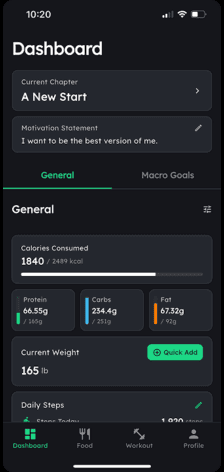
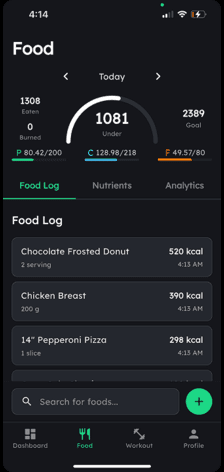
You scan a barcode for a protein bar. You measure out exactly thirty grams of peanut butter. You enter the data into your phone and stare at the daily total, wondering when the effort translates into something you can actually see.
Tracking macros requires cognitive overhead. Every meal becomes a math equation. It feels like work, and human nature expects immediate physical compensation for that work.
Biological change operates on a delay.
The lag between inputting data and seeing an outcome is where most people quit. They log their food for eleven days, see the scale fluctuate up after a salty dinner, and assume the protocol is broken. The protocol is usually fine. The timeline expectations are flawed.
Understanding how your body processes an energy deficit week by week removes the anxiety from the process. You stop looking for a transformed physique on day nine. You start looking for the correct physiological markers at the correct times.
Why Visual Portion Control Eventually Fails
The primary reason people start logging food is that guessing stops working. You might be eating clean whole foods. You might be avoiding obvious junk. But health and energy balance are two entirely different metrics.
A spoonful of olive oil looks like a hundred calories to the naked eye. Actual measurement often reveals it to be double that amount.
This measurement gap is the real reason progress stalls. People rely on their eyes to gauge energy intake, and human perception is notoriously optimistic when evaluating plate sizes. We see what we want to eat, not what the food mathematically contains.
Measuring and weighing food removes this cognitive blind spot. Studies repeatedly confirm that visual estimation of portion sizes is highly inaccurate compared to using a digital scale (König et al., Nutrients 2019).
Tracking macros bridges the gap between intention and reality. You are no longer guessing if you are in a deficit. You have the raw data sitting on your screen.
It takes a few days to adjust to the reality of actual portion sizes. The bowl of cereal you used to pour is likely three serving sizes, not one. The amount of cheese you used to sprinkle on a salad is likely a meal's worth of fat on its own. Recognizing these discrepancies is the first actual result of tracking macros, even before your body changes.
Weeks One and Two Bring Water Weight Shifts
The first fourteen days of tracking macros often produce a dramatic drop on the scale. This is the honeymoon phase of a new nutritional protocol.
You might lose three or four pounds in a single week. It is incredibly easy to assume this is pure body fat melting away. It is not.
When you begin tracking and inevitably restrict your total caloric intake, your body taps into its stored carbohydrates to make up the difference. A carbohydrate is stored in your muscles and liver as glycogen. Every gram of stored glycogen holds about three grams of water along with it.
Early caloric restriction primarily reduces stored glycogen and its associated body water (Anton et al., Obesity 2017).
As you deplete those stores, the water flushes out of your system. You will likely notice you look a bit flatter in the mirror. Your muscles might not feel as full during a workout. This is a normal physiological response, and it means the deficit is working as intended.
The danger here is entirely psychological.
When the water flush ends in week three, the scale will slow down significantly. If you expect the initial rapid drop to continue indefinitely, you will feel like you are failing right when the actual fat loss is just beginning. Calibrate your expectations early. The first two weeks are a water flush, not a fat flush.
Weeks Three to Six Reveal True Fat Oxidation
Around day twenty, the scale settles into a slower, grinding pace. Week three is often the hardest week of any tracking phase.
The initial water weight is gone. Now, the body must actually break down adipose tissue to make up for the daily energy shortfall. Fat oxidation is an inherently slow process. Despite what internet fitness personalities promise, the human organism can only mobilize and burn a finite amount of fat tissue per week.
A realistic rate of true fat mass oxidation hovers around one to two pounds weekly for most individuals (Elmaleh-Sachs et al., JAMA 2023).
This is also the period where macro composition becomes just as critical as total calories. If you only track total energy, you might end up hungry and lethargic. Tracking specific targets ensures you consume enough protein and adjust fats and carbohydrates to support your daily movement.
The specific ratio of these macronutrients directly affects daily fullness signals and alters the amount of energy burned simply through digesting your food (Keller, International Journal for Vitamin and Nutrition Research 2011).
Protein requires more energy to digest than carbohydrates or fats. It also keeps you satiated longer. When you track macros accurately, you leverage this digestive advantage to make the calorie deficit physically tolerable.
By week six, the mirror finally starts to reflect these choices. Clothes fit differently around the waist and shoulders. The quiet, consistent work of weeks three, four, and five begins to yield visual proof.

Proof that outlasts the water flush.
The scale stalls on day twenty and anxiety hits. Mofilo tracks your measurements so you have proof the deficit works.
No commitment · Cancel anytime
Why Daily Tracking Gets Exhausting
Just as the physical results become visible, the psychological friction usually peaks.
Logging every gram of food is tedious. It requires a specific kind of daily discipline that naturally wanes over time. You start skipping entries.
You estimate a lunch meal instead of weighing it. You leave the weekend untracked entirely, assuming you can mentally balance the math.
This behavioral drift is incredibly common. The cognitive load of using an app for every meal eventually creates fatigue.
Unsurprisingly, a steep drop in adherence for daily food tracking often occurs after the first few months (Lugones‐Sánchez et al., Journal of Medical Internet Research 2022).
This is not a failure of willpower. It is a predictable pattern of human behavior. Expecting to track perfectly for an entire year is a setup for disappointment. Taking a scale to a restaurant is socially awkward and mentally draining.
The goal of tracking macros is not to become permanently attached to a digital log. The goal is to calibrate your understanding of food volume and energy density. By month two, you should be learning what a proper portion of lean protein actually looks like on your plate without needing a scale to confirm it.
How Metabolism Adapts After Two Months
If you maintain a calorie deficit for eight straight weeks, your body will eventually push back.
As you lose mass, you require fewer calories simply to exist. A smaller body burns less energy at rest than a larger one. And the biological systems governing your metabolism become more efficient under the stress of a prolonged deficit.
Your body actively slows down its resting energy expenditure to resist further weight loss (Nymo et al., British Journal Of Nutrition 2018).
You might notice you feel slightly colder in the afternoons. You might unconsciously fidget less throughout the day. You sit deeper into the office chair. Your daily step count might drop by a few thousand steps without you even realizing it.
This adaptation explains why the macro targets that worked perfectly in week three stop producing results in week nine.
The deficit has closed itself. Your metabolism has caught up to your intake. To continue progressing, you have to adjust the targets downward or increase your daily activity. But dropping calories continuously is a miserable way to live, which is why periodic pauses become necessary.
Why Planned Breaks Keep You Progressing
The solution to metabolic adaptation and tracking fatigue is not just trying harder. It is taking strategic pauses.
Dieting is a stressor. Constant measurement is a stressor. Removing both temporarily can reset your psychological baseline and provide a physiological breather.
A planned break involves raising calories back to maintenance levels and putting the food scale away for a week or two. You eat the portions you learned to recognize during your tracked weeks. You eat enough to train hard, but not enough to actively gain fat.
Taking planned breaks from active monitoring can actually improve long-term adherence and metabolic outcomes without ruining prior progress (Carpenter et al., JMIR Formative Research 2022).
A break is not a green light to binge. It is a calculated return to normal eating using the skills you built over the previous two months.
You return to tracking refreshed. The time away from the app reminds you that you have developed the ability to manage your nutrition without a digital crutch. When you are ready to push for another phase of fat loss, you can re-enter your macro targets with renewed focus.
Give your tracking an end date.
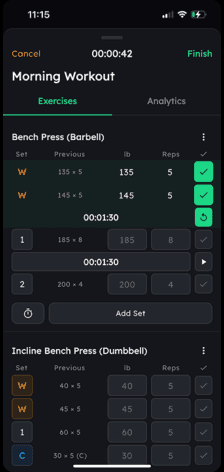
Logging every meal forever is exhausting. Mofilo lets you run your cut as a chapter, then take a planned break.
No commitment · Cancel anytime
Frequently Asked Questions
What kind of results should I expect first?
During the first two weeks, most of the weight you lose will be water and glycogen. Your stomach might look flatter, and you will likely feel lighter, but this is not significant fat loss yet. True fat oxidation takes longer to become visible. Expect a fast drop initially, followed by a much slower, steadier rate of change.
What if I don't see changes after a few weeks?
If the scale and the mirror remain completely unchanged after three weeks of tracking, the issue is usually the data. Most people underestimate their portion sizes if they aren't using a food scale. You might also be overestimating how many calories you burn during exercise. If you are confident in your tracking accuracy, you likely need to adjust your calorie target downward slightly to force a true deficit.
Does macro tracking work for everyone?
Tracking macros works physiologically for everyone because it governs energy balance. However, it does not work psychologically for everyone. Some people find that logging every meal triggers obsessive thoughts about food or exacerbates a history of disordered eating. For those individuals, habit-based nutrition or simple portion control guidelines are often a safer and more sustainable approach.
Can I track macros without weighing all my food?
You can use measuring cups or visual estimates, but doing so introduces a margin of error. That error often wipes out the calorie deficit you are trying to create. Weighing food on a digital scale is the most accurate method. Many people weigh their food strictly for a few weeks to learn what correct portions look like, and then transition to visual estimates once they have built that baseline knowledge.
How long should I track macros for?
Most successful tracking phases last between eight and twelve weeks. Beyond three months, tracking fatigue usually sets in, and adherence begins to drop. It is often best to track diligently for a set period to achieve a specific goal, take a planned break at maintenance calories, and then decide if you need another structured phase.
Conclusion
Tracking macros is a tool, not a lifestyle constraint.
You scan the barcodes and weigh the peanut butter to gather objective data about how your body responds to food. The early weeks clear out water weight and correct your portion perception. The middle weeks quietly chip away at stored body fat. The later weeks teach you how to adjust when your metabolism naturally adapts to the process.
Eventually, the numbers in the app become intuitive knowledge. You learn what a proper plate looks like. You understand the energy cost of your choices without needing to log them.
What begins as a tedious daily chore becomes an underlying skill. Use the tracking phase to build that skill, execute the deficit you planned, and then eventually put the scale away.
All content and media on Mofilo is created and published for informational purposes only. It is not intended to be a substitute for professional medical advice, diagnosis, or treatment. Always seek the advice of your physician or other qualified health provider with any questions you may have regarding a medical condition, including but not limited to eating disorders, nutritional deficiencies, injuries, or any other health concerns. If you think you may have a medical emergency or are experiencing symptoms of any health condition, call your doctor or emergency services immediately.
Read more blogs
How to Handle Social Pressure When You Start Eating Healthy
What You'll Learn in 10 Min
- •Why your new diet makes old friends act defensive
- •Which 2 simple responses stop direct food pushback
- •How occasional compromise beats rigid macro tracking
A Structured Ramp-Up Protocol When You Have No Motivation to Workout After Vacation
What You'll Learn in 9 Min
- •Why lost drive is a metabolic shift, not willpower
- •How to drop total sets to prevent crippling soreness
- •Which low-intensity moves restore your nervous system
How to Maintain Muscle During a Two-Week Vacation From the Gym
What You'll Learn in 12 Min
- •Why early vacation size loss is just water and carbs
- •How restricting calories on a break speeds muscle loss
- •Which protein timing mistake costs you lean mass daily