The Hidden Cause of Skinny Fat (Even When You're Lifting Consistently)
By Mofilo Team
Published 11 min read
Key Takeaways
- Resistance training only changes your physique when the stimulus crosses a clear threshold of effort. Doing the motions without getting close to failure mostly generates systemic fatigue instead of localized muscle growth.
- People usually try to fix a soft physique by eating slightly less and adding more cardio. You generally need to pick one clear direction, either a dedicated building phase or a dedicated fat loss phase, to see real changes.
- The majority of your daily energy expenditure happens entirely outside the gym walls. A sedentary lifestyle paired with one hour of lifting often results in lower total calorie burn than someone who just walks frequently throughout the day.
- Track the specific weights and repetitions you use every week to ensure progressive overload is actually happening. If the numbers in your logbook look the same as they did three months ago, your body will look the same too.
You pull on a fitted shirt, look in the mirror, and realize you look exactly the same as you did before you bought the gym membership. You go to the facility four days a week. You sweat.
You do the sets listed in your program. Yet your body composition refuses to budge. You have the weight of a lean person but the softness of someone who has never trained.
This specific physical state usually leads to a quiet, lingering fear that you just have terrible genetics. The assumption is that your body is somehow immune to the lifting adaptations that work for everyone else. Genetics do influence where you store body fat and how quickly you build tissue. They are rarely the reason you are stuck in this middle ground.
Most people who lift consistently but remain skinny fat are caught in a mismatch between their effort and their programming. They are working hard enough to get tired, but not hard enough to force an adaptation. Combine that with a nutritional strategy that hovers indefinitely around maintenance calories, and you have a recipe for stagnation.
Fixing this requires looking at what you are actually telling your body to do. Counting the hours you spend in the weight room is a poor metric for progress. The solution lies in the specific tension you apply to the muscle and the environment you create for recovery.
Why You Can Lift Consistently and Still Lack Muscle Definition
People often mistake gym attendance for training execution. Moving a weight from point A to point B burns calories. It does not automatically signal muscle growth unless those final repetitions are genuinely difficult.
Muscle tissue requires a specific reason to grow. The primary driver of this growth is mechanical tension.
This tension only reaches a useful threshold when a set is pushed close to failure. If you stop a set simply because it starts to feel uncomfortable, you are likely leaving several reps in the tank. This is the most common training error among people who feel they are doing everything right.
They complete three sets of ten. They picked a weight they could have lifted fifteen times.
The result is a workout that creates systemic fatigue without localized muscle adaptation. You leave the gym tired, but your muscles have no compelling reason to change their architecture. Over months and years, this builds a physique that is slightly stronger but visibly unchanged.
You have to push closer to the limit. The tenth rep should look and feel significantly slower than the first rep.
Progression stops when the body fully adapts to the current workload. A routine that felt challenging in January will not produce new muscle in June if the weights stay the same. Many lifters fall into the trap of repeating the exact same workout for years.
They maintain the minimal muscle they have, but they do not add new tissue to fill out their frame. Building a firm, defined physique requires exposing the tissue to slightly more stress over time.
The Calorie Middle Ground Problem
Nutrition heavily dictates how your lifting translates to your physique. Many lifters try to build muscle and lose fat simultaneously by eating right at their maintenance calories. In theory, this body recomposition is possible for beginners. In practice, it usually leaves intermediate lifters spinning their wheels.
Muscle is expensive for the body to build. It requires a surplus of energy and adequate protein. Fat loss requires an energy deficit.
When you hover in the middle, you often fail to provide enough calories to support meaningful muscle growth, while also eating too much to lean out. You end up with the same amount of muscle mass and the same layer of subcutaneous fat month after month.
Most people benefit from picking a distinct direction. If you have a higher body fat percentage, committing to a moderate calorie deficit to strip away the fat first is usually the smartest move. This reveals the baseline muscle you currently have.
If you are quite light but lack definition, you likely need to spend time in a slight calorie surplus. You have to build a foundation of muscle before there is anything to reveal.
The fear of gaining fat often keeps skinny fat individuals trapped in a permanent state of under-eating. They restrict calories just enough to prevent muscle growth. They do not restrict quite enough to get truly lean. This chronic indecision prevents any real physical transformation.
Committing to a dedicated building phase for several months is psychologically difficult. It is also usually the exact step required to permanently change your body composition. Once the new muscle is built, leaning out later reveals a completely different shape.

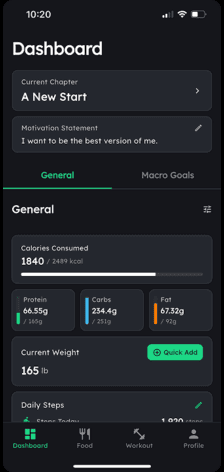
The phase where your hard work shows.
Hovering at maintenance leaves your physique unchanged. Build a dedicated chapter for a cut or bulk to force a real result.
No commitment · Cancel anytime
How Daily Movement Outside the Gym Changes Body Composition
A one hour workout makes up a tiny fraction of your day. The other twenty three hours dictate the vast majority of your energy expenditure. Many people who start lifting weights subconsciously compensate by reducing their movement outside the gym.
You train hard in the morning. You take the elevator instead of the stairs. You sit deeper into your office chair.
You spend the evening entirely on the couch. This drop in non-exercise activity thermogenesis can easily wipe out the calories burned during a lifting session (Flack et al., Frontiers in Psychology 2023).
You might think your metabolism is slow. Your daily movement has simply flatlined. When overall energy expenditure drops, it becomes much harder to maintain a lean physique.
This happens even if your diet is relatively clean. The body adapts to the fatigue of the gym by conserving energy everywhere else.
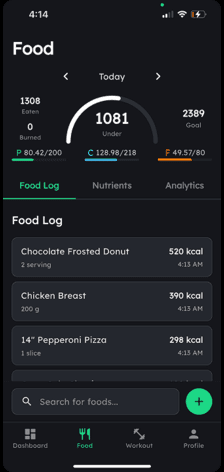
Walking matters immensely for body composition. Keeping your baseline step count high ensures your metabolism is actually working for you throughout the day. A sedentary lifestyle paired with one hour of lifting often results in lower total calorie burn than someone who just walks frequently.
The fix is not to add more exhausting gym sessions. The fix is to monitor your daily steps and keep them consistent. Aiming for a steady baseline of daily movement prevents your body from down-regulating your energy expenditure. It supports recovery by promoting blood flow without adding central fatigue.
When Cardio Makes the Problem Worse
The standard response to feeling soft is to run more. While cardiovascular exercise is excellent for heart health, using it as the primary tool to fix a lack of muscle definition often backfires. High volumes of moderate intensity cardio can interfere with recovery from resistance training.
If you are already eating in a deficit or hovering at maintenance, excessive cardio drains the energy needed to build or retain muscle. Your body adapts by becoming more efficient at the movement. Sometimes it sheds heavy muscle tissue to lighten the load. This shrinks you down without changing your proportions.
You become a smaller version of your current shape. This is the exact opposite of what most people want when they try to get toned. Prioritizing weight training and using brief, targeted cardio sessions usually yields better body composition results. The goal is to build the structural foundation of the body through lifting.
Running five miles a day sends a strong signal to prioritize endurance over maximum force production. When you mix heavy lifting with high volume running, the endurance adaptation usually wins. This leaves you leaner but flatter. If your primary goal is visual definition, resistance training has to be the priority.
Cardio should be dosed carefully to improve cardiovascular fitness without overwhelming your ability to recover. Two or three short sessions a week are generally enough for health. Pushing beyond that often requires a massive increase in food intake just to maintain muscle mass.
Why Tracking Your Training Variables Is Non-Negotiable
Memory is a terrible training partner. What you remember about Tuesday's session by Friday is usually a smoothed out summary. It is closer to a feeling than an accurate log. Without tracking, lifters naturally gravitate toward the same weights and the same rep counts week after week.
Your body adapts to the current stimulus. Once adapted, that exact same workout will not force further change. To build muscle, you have to systematically expose the tissue to slightly more stress over time.
Adding five pounds to the bar. Getting one more rep with the same weight. Improving your range of motion.
All of these are forms of progressive overload. If your logbook looks identical today to how it looked ninety days ago, your physique will reflect that stagnation. Writing it down removes the guesswork. It forces you to confront whether you are actually improving or just checking a box.
The simple act of recording your sets creates an objective standard for your next workout. You know exactly what you need to beat. This prevents the common habit of adjusting your effort downward on days when you feel slightly tired.
Having a target written in front of you changes the psychology of the set. You push for the ninth rep because the book says you did eight last week. That single extra rep is often where the actual growth stimulus occurs. Data tells you exactly what is required to progress.
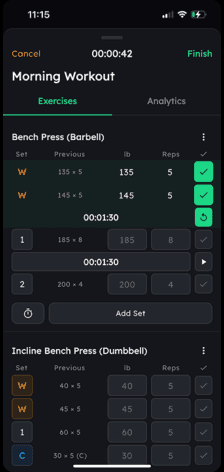
Force the tissue to change its shape.
The history is ready in the log. Beat last week's exact numbers, and the muscle has a reason to grow.
No commitment · Cancel anytime
Frequently Asked Questions
What is the difference between skinny fat and normal body fat?
Normal body fat accumulation usually happens across the whole frame, often paired with an average amount of muscle mass underneath. A skinny fat physique refers to having a relatively normal or low body weight on the scale, but a high percentage of body fat relative to muscle tissue. The lack of muscle mass makes the body look soft, even if the person wears small clothing sizes.
Can women be skinny fat, or is it just a male issue?
Women experience this just as frequently as men. Female fitness marketing often heavily promotes low weight exercises and extensive cardio. This combination is highly effective at burning calories but often fails to provide enough mechanical tension to build the muscle required for a firm look.
What are the best exercises to fix a skinny fat physique?
There are no magical movements that specifically target this condition. The issue is usually a lack of overall muscle mass. Compound movements like squats, deadlifts, presses, and rows give you the highest return on investment because they load multiple muscle groups heavily at once. Focusing on getting significantly stronger in basic movement patterns is the most reliable path out of a soft physique.
How long does it take to go from skinny fat to toned?
Changes in body composition are slow. Most people need at least six to twelve months of consistent, progressive lifting paired with appropriate nutrition to see a dramatic visual shift. The exact timeline depends on whether you need to spend time losing fat first or if you can immediately begin building muscle. Expecting a full transformation in eight weeks usually leads to disappointment.
Is it possible to struggle with this just because of bad genetics?
Genetics matter, but most lifters struggling with this are leaving progress on the table through training and recovery issues. Bone structure and muscle insertion points are genetic, and they dictate your ultimate shape. However, the ability to build muscle tissue and reduce body fat is a standard physiological response available to almost everyone when the training stimulus and nutritional support are aligned correctly.
Conclusion
It is incredibly frustrating to put in the time at the gym and not see the reflection change. The disconnect between effort and outcome usually comes down to how that effort is applied. Going through the motions of a lifting routine burns energy, but it takes progressive, challenging tension to actually build tissue.
Your body adapts to what you consistently give it. When you align your training intensity, your daily movement habits, and a clear nutritional goal, the adaptations finally start to show. You stop floating in the middle ground and start pushing your physiology in a specific direction.
What you do in the weight room is part of the picture, not the whole one. Better training execution, adequate recovery, and deliberate nutrition eventually change the outcome. Keep tracking your progress, push your working sets closer to failure, and trust that consistent, measurable improvement over time will reshape your physique.
All content and media on Mofilo is created and published for informational purposes only. It is not intended to be a substitute for professional medical advice, diagnosis, or treatment. Always seek the advice of your physician or other qualified health provider with any questions you may have regarding a medical condition, including but not limited to eating disorders, nutritional deficiencies, injuries, or any other health concerns. If you think you may have a medical emergency or are experiencing symptoms of any health condition, call your doctor or emergency services immediately.
Read more blogs
How to Handle Social Pressure When You Start Eating Healthy
What You'll Learn in 10 Min
- •Why your new diet makes old friends act defensive
- •Which 2 simple responses stop direct food pushback
- •How occasional compromise beats rigid macro tracking
A Structured Ramp-Up Protocol When You Have No Motivation to Workout After Vacation
What You'll Learn in 9 Min
- •Why lost drive is a metabolic shift, not willpower
- •How to drop total sets to prevent crippling soreness
- •Which low-intensity moves restore your nervous system
How to Maintain Muscle During a Two-Week Vacation From the Gym
What You'll Learn in 12 Min
- •Why early vacation size loss is just water and carbs
- •How restricting calories on a break speeds muscle loss
- •Which protein timing mistake costs you lean mass daily