Why Your Bench Press Is Stuck (And How to Fix It)
By Mofilo Team
Published 14 min read
Key Takeaways
- Upper body lifts stall quickly because neural efficiency peaks early in your training career. Continuing to build tissue requires shifting focus to adding reps rather than weight.
- Most lifters hit a wall by prioritizing load progression over volume progression. Pushing for more repetitions with the same weight builds the foundation for the next weight jump.
- Grinding out failed repetitions changes how your joints move and reinforces poor technique. Stopping a set while the bar is still moving fast preserves the movement pattern.
- Identifying exactly where the bar stops moving upward tells you which muscles are failing. Fixing that specific weakness with targeted range-of-motion work restarts progress.
You lie back on the bench, unrack the same weight you lifted last week, and the bar simply stops moving halfway up. The spotter grabs it. You sit up and realize your upper body strength has not moved a single pound in a month.
The quiet frustration of a bench press plateau is universal among lifters. The linear progress that worked for the first year of training abruptly stops. The bar feels heavier in your hands. The weight that used to fly up during warmups now feels like a maximum effort.
Most people react to this by trying harder. They add five more pounds, assume they just had a bad day, and attempt to force the weight up. This usually results in worse technique and more accumulated fatigue.
The reality of a stalled bench press is rarely a lack of effort. The issue is usually a progression model that has outlived its usefulness.
Adding weight to the bar every single week is only one way to force muscles to adapt.
When the weight stops moving, the progression track itself has to change. The solution is not pushing through the wall. The solution is finding a different metric to improve.
Why Bar Weight Stalls Before Muscle Growth Does
The first few months of any resistance training program are characterized by rapid strength increases. You add weight to the bar almost every session. This creates an expectation that strength is purely a function of muscle size.
The truth is slightly different. Those early gains are largely neurological. Your brain is learning how to fire muscle fibers in the correct sequence.
This coordination phase is highly efficient. Your nervous system becomes incredibly adept at the bench press movement pattern. The muscles themselves are growing, but the primary driver of the weight increase is motor learning.
Eventually, this neurological efficiency reaches a natural ceiling. The brain cannot coordinate the movement any better than it already does.
At this point, adding weight to the bar requires actual new muscle tissue.
Building new tissue is a much slower process than training the nervous system. This transition represents the exact timeline of neural versus hypertrophic adaptations in resistance training (Maltais et al., American Journal of Respiratory and Critical Care Medicine 2014). When the neural adaptations peak, the load progression inevitably stalls.
Lifters usually interpret this stall as a failure. They assume they are doing something wrong because the weekly weight jumps have stopped. The body simply operates on a different timeline for tissue growth. Continuing to push for load progression when the nervous system is maxed out leads directly to frustration.
You have to give the body a different reason to adapt. If the load cannot increase, the volume has to take over. This is the difference between load progression and rep progression.
Load progression asks the body to lift a heavier weight for the same number of repetitions. Rep progression asks the body to lift the exact same weight for more repetitions. Both methods signal the muscle to grow. One is simply more sustainable after the first year of lifting.
How Grinding Repetitions Ruins Your Technique
A common response to a stalled bench press is taking every set to absolute failure. The lifter refuses to accept that the weight is too heavy for the target rep range. They unrack the bar, complete three clean repetitions, and then fight for ten seconds to complete the fourth.
The spotter hovers over the bar. The hips shoot off the bench. The elbows flare out to the sides.
This type of effort feels productive. It leaves the chest and triceps exhausted. However, it actively sabotages long-term progress.
Grinding through a failed repetition changes the mechanics of the lift. When the chest and triceps can no longer move the bar, the body instinctively recruits other muscle groups to survive the effort.
This creates an immediate shift in how you perform the movement.
The shoulders roll forward and take over the strain. The elbows drift out of their safe, tucked position. This documents precisely how lifting to failure alters bench press kinematics and technique (Ansdell et al., Experimental Physiology 2020). You are no longer training the muscles you intended to train.
Worse, you are teaching your nervous system a new, inefficient movement pattern. The brain remembers the final, desperate repetition of a set. If you consistently end your bench press sets with compromised form, your body defaults to that compromised form earlier in the next workout. The technique degradation becomes permanent.
Leaving one or two repetitions in reserve preserves the movement pattern. The bar should move with relatively consistent mechanics from the first repetition to the last. If the bar speed slows to a crawl and your body position changes, the set is over. Pushing past that point generates fatigue without generating strength.
The Velocity Warning Sign
A bench press plateau rarely happens overnight. The weight does not suddenly become immovable on a random Tuesday. The body sends clear signals that the load progression is coming to an end weeks before the actual failure occurs. Most lifters simply ignore the signals because they are fixated on the numbers in their training log.
The most reliable indicator of an approaching plateau is bar speed. During a successful phase of load progression, the bar moves upward with a predictable, steady velocity. As you get closer to your true maximum capacity, that upward phase takes slightly longer.
The deceleration is subtle at first. You might not notice it unless you are recording your working sets on video.
By week three of a heavy training cycle, the middle portion of the lift becomes a distinct grind.
The bar speed drops significantly, even if you still manage to complete the prescribed number of repetitions. This exact deceleration is how velocity-based training metrics predict fatigue and strength plateaus (Jukić et al., Sports Medicine 2022). The nervous system is heavily fatigued.
Recognizing this velocity drop gives you a window of opportunity. Instead of waiting for the inevitable failed set the following week, you can proactively change your approach. You can drop the weight by ten percent and focus on moving the bar quickly again.
Ignoring the velocity warning sign guarantees a wall. The lifter who ignores the slowing bar will eventually unrack a weight they cannot press. They will accumulate massive amounts of central fatigue in the process. Paying attention to how fast the bar moves is just as important as tracking how much weight is on it.

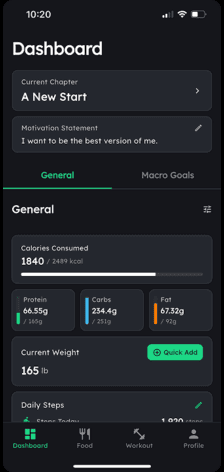
See the progress the bar hides.
The bar hasn't moved in a month. Log the extra reps. The volume chart proves your ceiling is actually a runway.
No commitment · Cancel anytime
How to Switch from Load to Rep Progression
When adding five pounds to the bar is no longer an option, the progression track must shift to volume. This requires a fundamental change in how you view a successful workout. Success is no longer defined by lifting a heavier weight. It is defined by doing more work with the same weight over a longer period.
Assume your bench press is stuck at 185 pounds for three sets of five repetitions. The traditional approach dictates trying 190 pounds the following week. If you fail, you try 190 pounds again the week after. This cycle can last for months with zero tangible progress.
The rep progression approach keeps the weight at 185 pounds. In the next workout, you aim for one set of six repetitions and two sets of five. The following week, you try for two sets of six and one set of five.
You slowly build the volume until you can comfortably press 185 pounds for three sets of eight repetitions. This clearly illustrates how volume progression compares to intensity progression for breaking strength plateaus and driving hypertrophy (Krzysztofik et al., International Journal of Environmental Research and Public Health 2019). You have built the necessary muscle tissue to handle a heavier load.
Once you hit that new volume target, you add weight.
You increase the load to 195 pounds and drop the repetitions back down to three sets of five. The cycle starts over. This process takes patience. It means accepting that your top-end strength will not change for a month while you build the underlying base.
Some lifters attempt to bypass this volume phase by using fractional plates. They add half a pound to each side of the bar, hoping the body will adapt to the tiny increase without needing a full volume block. While this strategy has a place in late-stage powerlifting, it is worth examining the effect of fractional plates or micro-loading on upper body strength progression (Plotkin et al., PeerJ 2022). Micro-loading often delays the inevitable plateau rather than preventing it.
If you lack the muscle mass to press a heavier weight, adding a single pound will still eventually result in a failed lift. Building raw volume at a manageable weight forces the tissue growth required for sustained progress. The rep progression track ensures that when you finally add weight, your body is genuinely prepared to handle it.
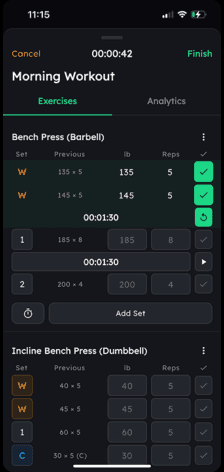
Run rep progression with a real log.
Your routine structure is saved. Log the extra reps, hit the target volume, and let your history dictate the weight jump.
No commitment · Cancel anytime
Diagnosing and Fixing Your Specific Sticking Point
Every failed bench press happens for a specific reason. The bar does not randomly stop moving. It stops at the exact point where the mechanical disadvantage of the lift exceeds the force your muscles can produce. Identifying where this happens is the first step in fixing the problem.
The bottom of the lift relies heavily on the pectoral muscles. The bar sits on the chest, and the initial drive upward requires maximum force from the chest and anterior deltoids. If you struggle to get the bar off your chest at all, your weakness is likely at the bottom range of motion.
The middle of the lift is where the transition occurs.
The chest is still involved, but the triceps begin to take over as the elbows extend. Many lifters find the bar moves off the chest easily but stalls three inches higher. This transition zone is a common area of failure.
Researchers have carefully mapped what biomechanical factors define the sticking point in the bench press (Kompf and Arandjelović, Sports Medicine 2016). The mechanics shift rapidly during this middle phase.
The top of the lift is dominated by the triceps. The chest has done its job, and the final lockout requires the triceps to fully extend the elbows. If you can press the bar most of the way up but cannot lock it out, your triceps are the limiting factor.
Once you know where your bench press fails, you can select the right accessory exercises to fix it. Doing endless sets of cable crossovers will not help you lock out a heavy barbell. The accessory work must match the mechanical demands of the sticking point.
If your weakness is at the bottom of the lift, paused bench presses are highly effective. You bring the bar to your chest, let it rest completely motionless for two seconds, and then drive it upward. This removes the stretch reflex and forces the pectoral muscles to generate raw starting power.
If your weakness is in the middle transition zone or at the top lockout, partial range of motion exercises become necessary. Board presses or pin presses in a power rack allow you to overload the exact portion of the lift where you struggle. This confirms the effectiveness of partial range of motion training for overcoming sticking points (Coratella, Sports Medicine - Open 2022). You can handle heavier weights in these shortened ranges, which builds strength specifically in the triceps.
Close-grip bench presses are another excellent tool for lockout weakness. Moving your hands slightly closer together shifts the mechanical burden away from the chest and heavily onto the triceps. The key is treating accessory work as targeted medicine. Pick one movement that addresses your specific sticking point, perform it after your main sets, and give it a few weeks to drive an adaptation.
Why Rest Times Sabotage Upper Body Volume
Upper body muscles are smaller than lower body muscles. The chest, shoulders, and triceps do not demand the same massive cardiovascular output as the legs and back. Because a set of bench presses does not leave you gasping for air like a heavy set of squats, lifters tend to rush their rest periods.
They rack the bar, check their phone, wait sixty seconds, and jump right back into the next set. This feels efficient. The heart rate stays elevated, and the workout moves quickly. However, this short rest interval is a primary reason why volume progression stalls.
Muscle fibers require time to replenish their local energy stores.
Adenosine triphosphate and phosphocreatine levels in the muscle drop rapidly during a heavy set. Taking a short rest period means you start the next set before those energy stores have recovered. This directly reduces the number of repetitions you can perform.
The difference between a one-minute rest and a three-minute rest is often two or three repetitions on the bench press. This highlights the impact of rest interval duration on bench press volume load and strength maintenance (Rhodes et al., Critical Care Medicine 2017). If you are trying to switch to a rep progression model, resting longer is non-negotiable.
You need maximum volume to force muscle growth. Rushing your rest periods artificially limits that volume. Wait three to five minutes between heavy sets. The muscles will be fully prepared to handle the load, allowing you to complete the target repetitions and break the plateau.
Frequently Asked Questions
How often should I deload a stalled bench press?
A deload is typically necessary every four to six weeks if you are training close to failure. If your bench press has been stuck for three consecutive weeks, dropping the weight by ten to fifteen percent for one week can help clear the accumulated fatigue. Most lifters return stronger after giving their joints and nervous system a chance to recover.
Can changing my grip help break a bench press stall?
Adjusting your grip width changes which muscles do the most work. A slightly wider grip places more emphasis on the chest, while a narrower grip forces the triceps to work harder. If you have been stuck for a long time, moving your grip one inch in either direction can provide a novel stimulus and restart your progress.
What if my form breaks down at heavier weights?
Form breakdown is a clear indicator that the weight is too heavy for your current strength level. When your elbows flare or your hips lift off the bench, you are no longer training the target muscles safely. The most effective approach is to lower the weight to a point where your technique remains solid and build your volume from there.
Are there specific accessory exercises for a stuck bench?
The best accessory exercise depends entirely on where the bar stops moving. If you fail at the bottom, paused bench presses or dumbbell presses build starting strength. If you fail near the top, close-grip bench presses or triceps isolation work will help strengthen your lockout.
How long does a true bench press plateau last?
A genuine strength plateau can last for months if you refuse to change your training variables. Continuing to attempt the same heavy weight every week simply reinforces the stall. Once you switch from load progression to volume progression, most lifters see renewed progress within three to four weeks.
Conclusion
A stalled bench press is a normal phase of the training lifecycle. The rapid strength increases you experience during your first year of lifting eventually slow down as your nervous system reaches its peak efficiency. When the weekly weight jumps stop, continuing to force heavier loads only leads to compromised technique and unnecessary fatigue.
Breaking the stall requires a shift in perspective. You have to step away from the immediate gratification of adding five pounds to the bar. Dropping the weight slightly and focusing on adding repetitions builds the actual muscle tissue required for future strength gains. Identifying exactly where the bar stops moving gives you the blueprint for your accessory work.
Your training log will eventually move again. Taking longer rest periods, controlling your bar speed, and respecting your limits will build a much stronger foundation. The weight on the bar is just a metric. Building the tissue to move it takes time.
All content and media on Mofilo is created and published for informational purposes only. It is not intended to be a substitute for professional medical advice, diagnosis, or treatment. Always seek the advice of your physician or other qualified health provider with any questions you may have regarding a medical condition, including but not limited to eating disorders, nutritional deficiencies, injuries, or any other health concerns. If you think you may have a medical emergency or are experiencing symptoms of any health condition, call your doctor or emergency services immediately.
Read more blogs
How to Handle Social Pressure When You Start Eating Healthy
What You'll Learn in 10 Min
- •Why your new diet makes old friends act defensive
- •Which 2 simple responses stop direct food pushback
- •How occasional compromise beats rigid macro tracking
A Structured Ramp-Up Protocol When You Have No Motivation to Workout After Vacation
What You'll Learn in 9 Min
- •Why lost drive is a metabolic shift, not willpower
- •How to drop total sets to prevent crippling soreness
- •Which low-intensity moves restore your nervous system
How to Maintain Muscle During a Two-Week Vacation From the Gym
What You'll Learn in 12 Min
- •Why early vacation size loss is just water and carbs
- •How restricting calories on a break speeds muscle loss
- •Which protein timing mistake costs you lean mass daily